
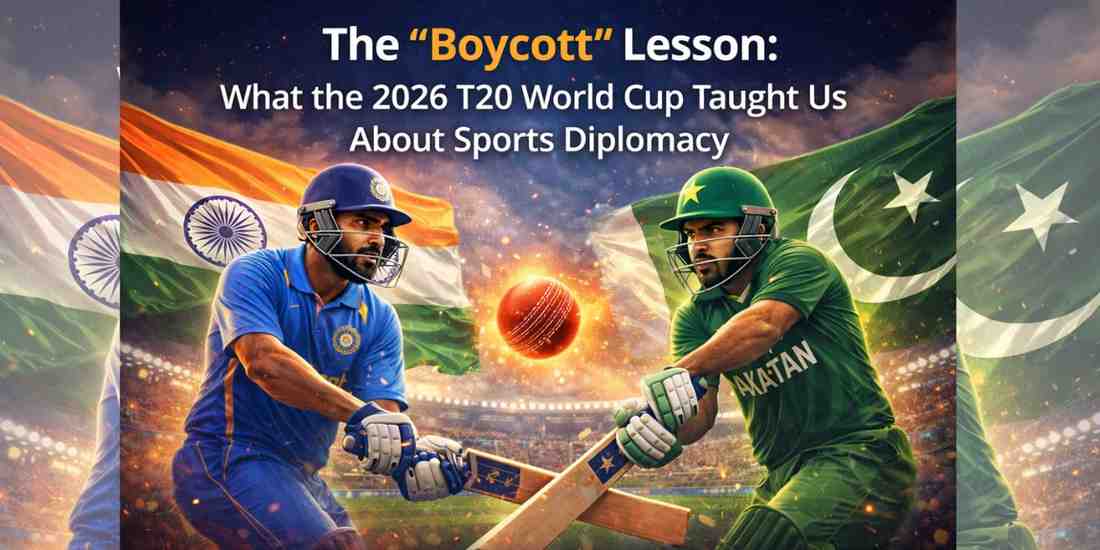
The 2026 T20 World Cup sports diplomacy debate became one of the biggest talking points in international cricket this year. What began as a sporting tournament quickly evolved into a global discussion about politics, national interests, and the power of sports diplomacy in shaping international relations.
The controversy around boycott calls during the 2026 T20 World Cup highlighted how modern sports events are no longer just about cricket — they are deeply connected to geopolitics, diplomacy, and global influence.
2026 T20 World Cup and the Rise of Sports Diplomacy
The 2026 T20 World Cup was expected to showcase world-class cricket, emerging talent, and record-breaking performances. However, tensions between participating nations shifted focus toward sports diplomacy and political messaging.
Sports diplomacy refers to the use of sporting events to improve international relations, reduce tensions, and foster cooperation between countries. The events surrounding the 2026 T20 World Cup demonstrated how cricket, especially in South Asia, is more than just a game — it is a diplomatic bridge.
The “Boycott” Debate: Politics Meets Cricket
Calls for boycott during the 2026 T20 World Cup sparked global headlines. Social media campaigns, political statements, and public reactions showed how deeply sport is intertwined with national identity and foreign policy.
The boycott discussion revealed three key realities:
- International sporting events are platforms for political messaging.
- Governments increasingly view global tournaments as strategic opportunities.
- Fans play a major role in shaping sports diplomacy narratives.
While some stakeholders advocated for political accountability, others argued that sport should remain separate from geopolitics.
How the 2026 T20 World Cup Redefined Cricket Diplomacy
Cricket diplomacy has historically played a powerful role in South Asia. From bilateral series restoring ties to symbolic gestures between rival nations, cricket has often opened communication channels where politics failed.
The 2026 T20 World Cup sports diplomacy episode reinforced that:
- Global cricket events influence diplomatic conversations.
- International sports bodies must balance neutrality and political sensitivity.
- Economic interests in global tournaments are too significant to ignore.
Sponsors, broadcasters, and tourism sectors were closely watching the developments, highlighting the financial dimension of sports diplomacy.
Impact on International Relations and Global Sports Governance
The boycott lesson from the 2026 T20 World Cup also raised questions about the future of international sports governance. Organizations like the ICC face growing pressure to manage political disputes while preserving the integrity of the game.
Key diplomatic takeaways include:
- The need for clearer neutrality policies in global tournaments.
- Greater dialogue between governments and sports federations.
- Recognition of sports as soft power tools in global diplomacy.
The tournament proved that cricket diplomacy can either escalate tensions or serve as a peace-building mechanism.
Economic and Soft Power Implications
The 2026 T20 World Cup demonstrated how sports function as instruments of soft power diplomacy. Host nations use mega sporting events to enhance global reputation, attract foreign investment, and strengthen cultural influence.
A boycott threat can:
- Impact tourism revenue
- Affect sponsorship deals
- Disrupt broadcasting contracts
- Influence global perception
This makes sports diplomacy a strategic element of international relations in 2026 and beyond.
Lessons from the 2026 T20 World Cup Boycott Controversy
The biggest lesson from the 2026 T20 World Cup sports diplomacy debate is that sport cannot be completely isolated from politics. However, it also showed that dialogue through sport can reduce hostility rather than intensify it.
Moving forward, global cricket tournaments must:
- Strengthen diplomatic coordination
- Promote cultural exchange initiatives
- Encourage player-led peace messages
- Protect the spirit of fair competition
The boycott episode may ultimately be remembered not for disruption, but for the conversation it sparked about the future of sports diplomacy.
Why Sports Diplomacy Matters More Than Ever in 2026
In an increasingly polarized world, sporting events like the 2026 T20 World Cup serve as rare platforms where nations compete peacefully under shared rules. The tournament reminded the world that sports diplomacy remains one of the most powerful non-political tools for global engagement.
As cricket continues to expand globally, its role in international diplomacy will only grow stronger.
Frequently Asked Questions (FAQs)
What was the boycott controversy in the 2026 T20 World Cup?
The boycott controversy involved political tensions between participating nations, leading to calls for withdrawing from the tournament and raising concerns about sports diplomacy.
What is sports diplomacy?
Sports diplomacy is the use of sporting events to improve international relations and promote dialogue between nations.
How did the 2026 T20 World Cup impact international relations?
The tournament highlighted the connection
Also read: IndiGo Moves to Comply With DGCA’s Revised Pilot Fatigue Norms, Ends Earlier Exemptions
Add News Pixel as preferred source on Google- Click here
Last Updated on: Thursday, February 12, 2026 3:26 pm by News Pixel Team | Published by: News Pixel Team on Thursday, February 12, 2026 3:26 pm | News Categories: Sports

Leave a Reply