
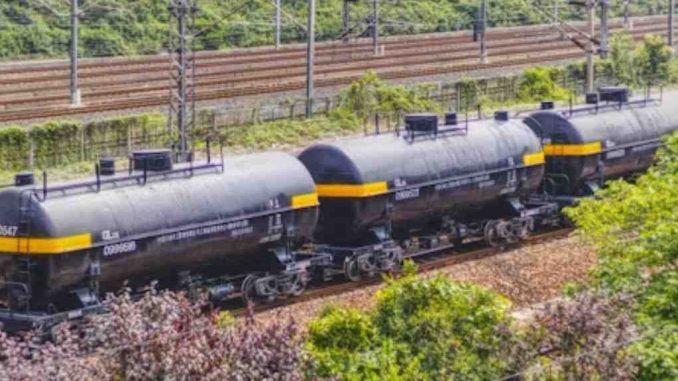
As global tensions continue to affect crude oil supplies and fuel prices, concerns about a possible petrol and diesel shortage are growing rapidly. Amid fears of rising transportation costs and energy disruptions, the government’s India fuel crisis survival plan is drawing nationwide attention.
While work-from-home policies are once again being discussed as a temporary solution, experts say India is also relying on three major long-term projects that could help the country manage any severe fuel crisis more effectively.
These initiatives focus on reducing oil dependency, strengthening domestic infrastructure, and securing future energy needs.
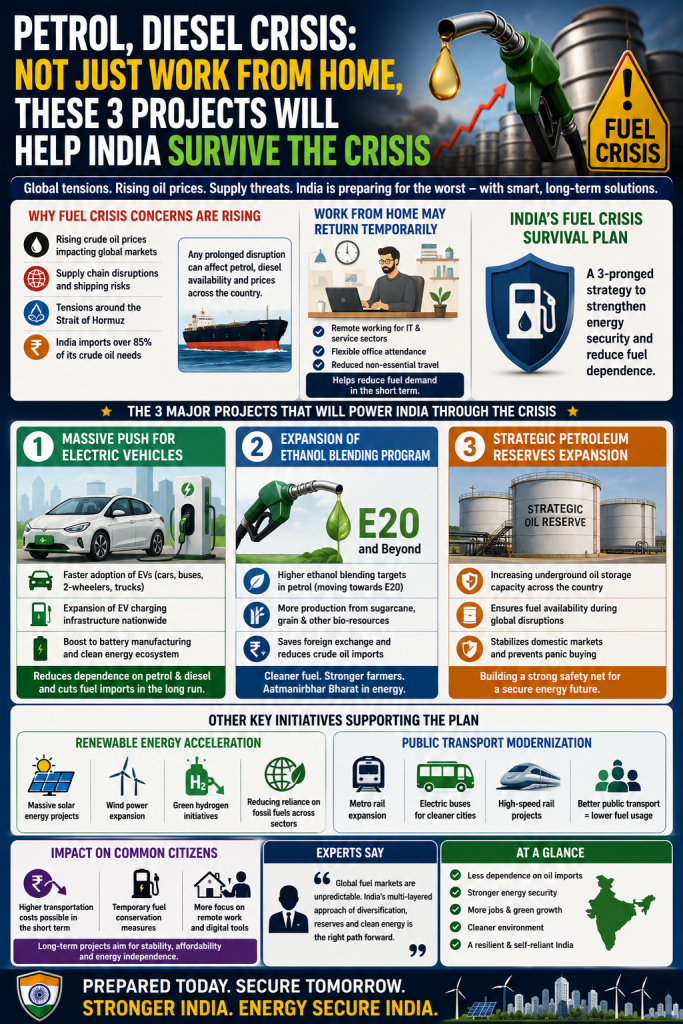
Why Fuel Crisis Concerns Are Rising
The latest discussions around the India fuel crisis survival plan come as global oil markets remain unstable due to geopolitical tensions in West Asia.
Key concerns include:
- Rising crude oil prices
- Supply chain disruptions
- Threats around the Strait of Hormuz
- Increased import costs for oil-dependent nations
Since India imports a large portion of its crude oil requirements, any prolonged disruption can directly impact petrol and diesel availability and prices.
Work From Home May Return Temporarily
One immediate part of the India fuel crisis survival plan involves reducing unnecessary fuel consumption.
Experts and policymakers are discussing:
- Remote working options for IT and service sectors
- Flexible office attendance
- Reduced non-essential travel
This strategy was previously used during the COVID-19 period and helped lower transportation fuel demand significantly.
However, authorities are also focusing on long-term structural solutions beyond temporary restrictions.
Project 1: Massive Push for Electric Vehicles
One of the biggest pillars of the India fuel crisis survival plan is India’s accelerated electric vehicle transition.
The government is increasing support for:
- Electric cars and buses
- EV charging infrastructure
- Battery manufacturing projects
Reducing dependence on petrol and diesel vehicles can help India lower fuel imports over time.
Several states are already expanding EV adoption programs in public transportation systems.
Project 2: Expansion of Ethanol Blending Program
Another major component of the India fuel crisis survival plan is ethanol blending.
India has aggressively expanded ethanol usage in petrol to reduce crude oil dependency.
The strategy includes:
- Higher ethanol blending targets
- Increased sugarcane-based fuel production
- Support for biofuel industries
Officials believe this can save billions in foreign exchange while reducing pressure on conventional fuel supplies.
The government has already achieved significant progress toward its ethanol blending goals in recent years.
Project 3: Strategic Petroleum Reserves Expansion
Perhaps the most critical element of the India fuel crisis survival plan is the expansion of strategic petroleum reserves.
India is increasing underground oil storage capacity to ensure emergency fuel availability during global disruptions.
These reserves help the country:
- Maintain fuel supply during crises
- Stabilize domestic markets
- Reduce panic during international conflicts
Energy experts consider strategic reserves essential for long-term energy security.
Renewable Energy Also Plays a Key Role
The India fuel crisis survival plan also depends heavily on renewable energy growth.
India is rapidly investing in:
- Solar energy projects
- Wind power expansion
- Green hydrogen initiatives
The objective is to gradually reduce reliance on fossil fuels across sectors.
This shift could help protect the economy from future oil shocks.
Public Transport Modernization
Another important aspect of the India fuel crisis survival plan involves strengthening mass public transport.
Projects under development include:
- Metro rail expansion
- Electric buses
- High-speed rail systems
Improved public transport reduces individual fuel consumption while lowering overall oil demand.
Impact on Common Citizens
The India fuel crisis survival plan could affect daily life in several ways.
Possible short-term impacts include:
- Higher transportation costs
- Temporary fuel conservation measures
- Increased focus on remote work
However, the long-term projects aim to make India less vulnerable to global oil disruptions.
Experts Say Preparedness Is Crucial
Energy analysts believe the India fuel crisis survival plan is necessary because global fuel markets are becoming increasingly unpredictable.
Experts warn that countries dependent on oil imports must:
- Diversify energy sources
- Build emergency reserves
- Promote cleaner transportation
India’s current strategy appears focused on all three areas simultaneously.
Conclusion
The India fuel crisis survival plan goes far beyond temporary work-from-home discussions. Through electric vehicles, ethanol blending, and strategic petroleum reserves, India is building a multi-layered approach to survive future fuel disruptions.
As global energy uncertainty continues, these projects could play a major role in protecting India’s economy, transportation systems, and long-term energy security.
Also read: Massive Boost: Noida Mega Project 2026 Worth ₹2.27 Lakh Crore Set to Transform Uttar Pradesh Economy
Add News Pixel as a preferred source on Google – Click Here
Edited By- E. Lakshmi Tejasri
Last Updated on: Wednesday, May 13, 2026 6:34 pm by E. Lakshmi Tejasri | Published by: E. Lakshmi Tejasri on Wednesday, May 13, 2026 5:49 pm | News Categories: Business, India

Leave a Reply