
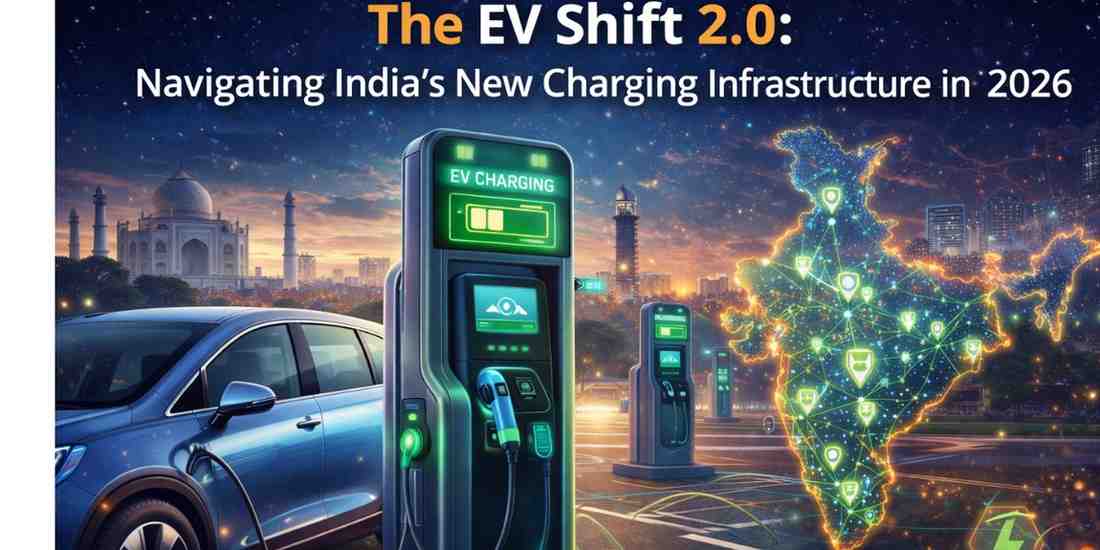
India’s electric vehicle (EV) revolution is accelerating in 2026, marking what many experts call EV Shift 2.0. With rapid expansion in EV charging infrastructure in India, government incentives, and rising fuel prices, electric mobility is no longer a niche market — it is becoming mainstream.
From metro cities to Tier-2 and Tier-3 towns, the India EV ecosystem is evolving rapidly. The focus has shifted from just selling electric vehicles to building a reliable, fast, and accessible EV charging network across India.
What is EV Shift 2.0?
EV Shift 2.0 refers to the second phase of India’s electric mobility transformation. While the first phase focused on EV adoption through subsidies like FAME II (Faster Adoption and Manufacturing of Electric Vehicles), the new phase emphasizes:
- Nationwide public EV charging stations
- Fast-charging corridors on highways
- Battery swapping infrastructure
- Integration of renewable energy with EV charging
- Smart charging technology and digital payment systems
In 2026, India is aiming to create one of the largest electric vehicle charging infrastructures in Asia.
Growth of EV Charging Infrastructure in India
One of the biggest concerns for EV buyers has been range anxiety. However, 2026 data shows significant improvement:
- Thousands of new fast EV chargers installed in major cities.
- Dedicated EV charging corridors on national highways.
- Private companies partnering with oil marketing companies (OMCs) to expand charging stations.
- Integration of charging points in malls, IT parks, residential societies, and metro stations.
Government-backed initiatives under the India EV policy 2026 have accelerated public-private partnerships, ensuring that charging points are accessible within short distances in urban areas.
Fast Charging vs Battery Swapping: What’s Trending in 2026?
India’s EV infrastructure strategy includes both DC fast charging stations and battery swapping technology.
Fast Charging Stations
- 30–60 minutes charging time
- Ideal for highways and commercial fleets
- Increasing adoption for electric SUVs and premium EVs
Battery Swapping
- Takes less than 5 minutes
- Popular among electric two-wheelers and delivery fleets
- Reduces upfront EV cost by separating battery ownership
In 2026, both models are complementing each other, strengthening India’s electric mobility ecosystem.
Role of Government Policies in EV Infrastructure Growth
The success of EV Shift 2.0 is largely driven by strong government policies:
- State-level EV policies offering subsidies on charging station installation
- Reduced GST on electric vehicles
- Production Linked Incentive (PLI) scheme for battery manufacturing
- Smart city integration with EV infrastructure
The Indian government’s vision is to achieve significant EV penetration by 2030, making 2026 a critical transition year for the Indian EV market.
Impact on Businesses and Startups
The expansion of EV charging infrastructure in India has created massive opportunities:
- EV charging station franchises
- Battery manufacturing startups
- EV fleet management companies
- Renewable energy integration businesses
- EV software and charging app developers
Startups focusing on smart EV charging solutions, AI-powered energy management, and IoT-enabled charging stations are seeing rapid growth in funding and innovation.
Challenges in India’s EV Infrastructure Development
Despite rapid growth, challenges remain:
- Power grid stability in smaller towns
- Standardization of charging connectors
- High initial infrastructure cost
- Rural accessibility gaps
However, technological advancements and policy reforms are steadily addressing these concerns.
How EV Shift 2.0 Impacts Consumers
For consumers in 2026, the EV ecosystem offers:
- Lower running costs compared to petrol/diesel vehicles
- Increasing availability of affordable EV models
- Improved charging convenience
- Better resale value for electric cars
- Growing confidence in long-distance EV travel
The improved EV charging network in India has significantly reduced range anxiety, encouraging more middle-class families to consider electric vehicles.
The Future of Electric Vehicles in India Beyond 2026
Looking ahead, India is expected to:
- Expand ultra-fast charging stations
- Integrate solar-powered EV charging hubs
- Promote green hydrogen and hybrid technologies
- Strengthen domestic battery manufacturing
Experts predict that India could become a global leader in sustainable transportation and electric mobility solutions.
Conclusion: India’s EV Shift 2.0 is Just the Beginning
The year 2026 marks a defining moment for India’s electric vehicle revolution. With rapid development of EV charging infrastructure, supportive government policies, and increasing consumer demand, the country is moving confidently toward a cleaner and more sustainable transportation future.
EV Shift 2.0 is not just about vehicles — it is about building a complete digital, green, and energy-efficient mobility ecosystem for India.
Also read: The “Boycott” Lesson: What the 2026 T20 World Cup Taught Us About Sports Diplomacy
Add News Pixel as preferred source on Google- Click here
Last Updated on: Thursday, February 12, 2026 4:04 pm by News Pixel Team | Published by: News Pixel Team on Thursday, February 12, 2026 4:04 pm | News Categories: India, Technology

Leave a Reply