
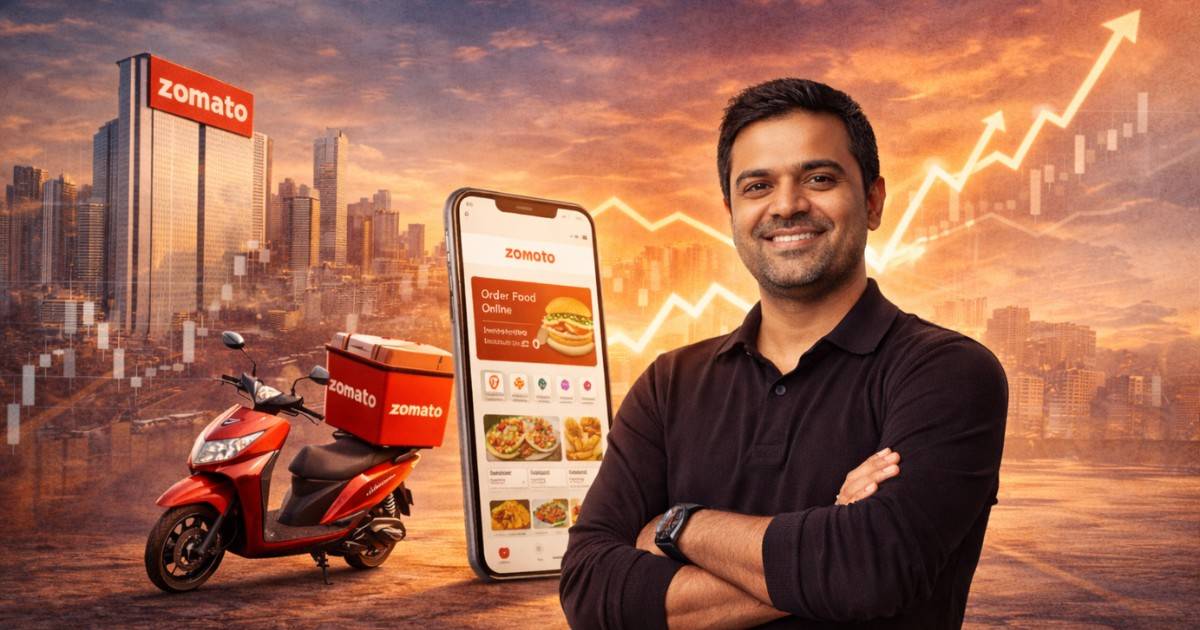
Deepinder Goyal is widely recognised as one of India’s most influential startup founders, having transformed the way millions of people discover, order, and experience food. As the co-founder and CEO of Zomato, he has played a defining role in shaping India’s food-tech and quick-commerce landscape, navigating fierce competition, regulatory challenges, and shifting consumer behaviour.
From a modest beginning to leading a publicly listed tech company, his entrepreneurial journey reflects resilience, innovation, and a deep understanding of India’s digital economy.
Early Life and Education of Deepinder Goyal
Deepinder Goyal was born and raised in Punjab and displayed an early aptitude for academics. He pursued engineering at the Indian Institute of Technology (IIT) Delhi, one of the country’s most prestigious institutions. After graduating, he joined Bain & Company as a management consultant, where he gained exposure to business strategy and operational efficiency.
It was during his time at Bain that the initial idea for a food discovery platform took shape. Observing colleagues struggle to access restaurant menus sparked the concept that would later evolve into Zomato.
The Birth of Zomato and Entrepreneurial Leap
In 2008, Deepinder Goyal took a bold step by launching Foodiebay, a website aimed at digitising restaurant menus. At a time when India’s startup ecosystem was still in its infancy, the idea faced skepticism. However, rapid adoption among users proved there was a clear gap in the market.
The platform was later rebranded as Zomato, marking a turning point in its expansion journey. What began as a simple menu discovery site gradually evolved into a full-scale food delivery and restaurant technology platform, setting new benchmarks in the industry.
Scaling Zomato Under Deepinder Goyal’s Leadership
Deepinder Goyal played a central role in scaling Zomato beyond Indian borders. The company expanded into multiple international markets, focusing on restaurant listings, reviews, and digital engagement. His leadership emphasized technology-driven growth and brand visibility.
Despite facing setbacks in some global regions, the experience helped refine Zomato’s core strategy. The company eventually shifted focus back to high-growth markets, particularly India, where food delivery demand surged with increasing smartphone penetration.
Deepinder Goyal and Zomato’s IPO Journey
One of the most defining moments in Deepinder Goyal’s career came with Zomato’s initial public offering in 2021. The IPO marked a milestone for India’s startup ecosystem, signaling growing acceptance of new-age technology companies in public markets.
While post-listing volatility tested investor confidence, Goyal remained vocal about prioritizing long-term profitability over short-term stock movements. His transparent communication style and willingness to acknowledge challenges earned him respect among investors and industry peers.
Leadership Style and Decision-Making Approach
Deepinder Goyal is known for his candid leadership style and data-driven decision-making. He has often taken unconventional positions on issues such as layoffs, pricing strategies, and business restructuring, openly sharing the rationale behind tough decisions.
This transparency has shaped Zomato’s corporate culture, emphasizing accountability and adaptability. His willingness to pivot strategies based on market realities has helped the company survive intense competition in India’s food delivery space.
Role in India’s Quick-Commerce Evolution
In recent years, Deepinder Goyal has also played a key role in expanding Zomato’s presence beyond food delivery. The company’s entry into quick commerce through Blinkit signaled a strategic shift toward faster, convenience-driven services.
By integrating grocery and essentials delivery into Zomato’s ecosystem, Goyal has positioned the company to benefit from changing urban consumption patterns. This diversification reflects his broader vision of building a comprehensive consumer services platform rather than a single-product business.
Challenges Faced by Deepinder Goyal
Despite success, Deepinder Goyal’s journey has not been without challenges. Regulatory scrutiny, rising delivery costs, restaurant partner concerns, and intense competition from rivals have consistently tested the business.
Market expectations around profitability have also placed pressure on leadership decisions. However, Goyal’s focus on operational efficiency and sustainable unit economics has gradually addressed many of these concerns.
Deepinder Goyal’s Impact on India’s Startup Culture
Beyond Zomato, Deepinder Goyal has influenced India’s startup culture by encouraging founders to embrace transparency, resilience, and long-term thinking. His journey highlights the importance of persistence in an ecosystem where failure is often stigmatized.
He has also become a reference point for aspiring entrepreneurs, demonstrating that Indian startups can build globally relevant, technology-driven businesses while operating in highly competitive markets.
Long-Term Vision and Future Outlook
Looking ahead, Deepinder Goyal’s focus remains on building sustainable, scalable business models. His vision for Zomato extends beyond food delivery into broader consumer convenience and digital commerce.
As India’s urban population grows and on-demand services become mainstream, his strategic decisions will continue to shape how consumers interact with everyday services. While market conditions may fluctuate, his influence on India’s digital economy remains significant.
Final Perspective
Deepinder Goyal’s journey from an IIT graduate to the CEO of one of India’s most recognisable tech companies reflects the evolving nature of entrepreneurship in the country. His ability to adapt, take risks, and lead through uncertainty has made him a defining figure in India’s startup narrative.
As Zomato continues to evolve, Deepinder Goyal stands as a symbol of modern Indian entrepreneurship—driven by innovation, grounded in execution, and focused on long-term value creation.
Also Read: Tata Motors Share Price Outlook 2026: Growth, EV Strategy and Long-Term Investor View
Follow us on google news: click here
Last Updated on: Friday, January 23, 2026 3:47 pm by Akshaya Polepalli | Published by: Akshaya Polepalli on Thursday, January 22, 2026 4:38 pm | News Categories: Business
About The Author

Comment here