
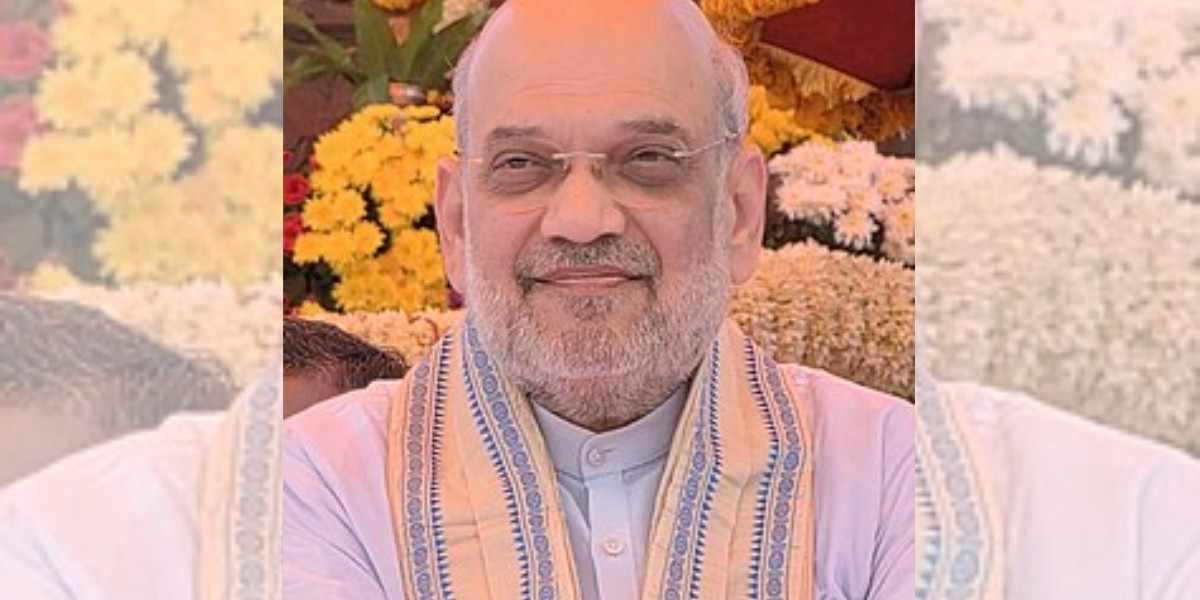
Union Home Minister Amit Shah on Tuesday criticised the Congress party over its record on tribal welfare, alleging that indigenous communities were neglected for decades. Speaking at a public event, Shah also asserted that Naxalism in India is now in its “last phase,” attributing the decline to the Centre’s security and development-focused approach under Prime Minister Narendra Modi.
Key Announcements / Highlights
- Amit Shah accused previous Congress governments of failing to prioritise tribal development.
- He claimed Left-Wing Extremism (LWE), commonly referred to as Naxalism, is nearing its end.
- The government’s dual strategy of security operations and infrastructure development was highlighted.
- Focus was placed on welfare schemes aimed at tribal regions and remote areas.
Official Statement
Addressing the gathering, Shah questioned the historical approach of earlier governments towards tribal communities, asking why these regions remained underdeveloped despite decades of governance. He argued that the current administration has prioritised inclusive growth by improving connectivity, education, and access to welfare schemes in tribal belts.
On the issue of Naxalism, Shah said the situation has significantly improved in recent years. He credited coordinated efforts between central and state agencies, along with increased development spending, for reducing the influence of extremist groups. According to him, areas once affected by violence are now witnessing better governance and economic activity.
Context / Background
Naxalism, a form of Left-Wing Extremism, has historically affected parts of central and eastern India, including regions with large tribal populations. These areas often faced challenges such as poverty, lack of infrastructure, and limited access to education and healthcare.
Over the past decade, the government has adopted a two-pronged strategy to address the issue. This includes intensified security operations against armed groups, alongside development initiatives like road construction, mobile connectivity, banking access, and welfare scheme implementation.
Data from the Ministry of Home Affairs in recent years has indicated a steady decline in the number of violent incidents and districts affected by Naxal activity. However, some pockets continue to remain vulnerable.
Public Impact
The government maintains that improving infrastructure and delivering welfare schemes directly to beneficiaries has helped integrate tribal regions into the broader economy. Initiatives such as rural road development, electrification, and direct benefit transfers are expected to improve living standards in these areas.
For tribal communities, the focus on education, healthcare, and employment opportunities is seen as crucial to reducing dependence on insurgent networks. At the same time, security operations aim to ensure safer conditions for residents and local governance.
However, experts often point out that long-term success depends on sustained development, protection of land rights, and meaningful community participation in decision-making.
Conclusion
Amit Shah’s remarks underline the government’s position that a combination of security measures and development policies has significantly weakened Naxalism in India. While official data suggests a downward trend in extremist activity, the broader challenge remains ensuring inclusive and sustainable growth in tribal regions.
The coming years will be critical in determining whether these efforts can fully eliminate Left-Wing Extremism and address the longstanding socio-economic concerns of tribal communities.
Also read: CSK vs RR: Ruturaj Gaikwad Reacts After Chennai Super Kings’ Heavy Defeat to Rajasthan Royals
Add News Pixel as a preferred source on Google – Click Here
Edited By- E. Lakshmi Tejasri
Last Updated on: Tuesday, March 31, 2026 2:02 pm by E. Lakshmi Tejasri | Published by: E. Lakshmi Tejasri on Tuesday, March 31, 2026 2:02 pm | News Categories: India, Politics

Leave a Reply