
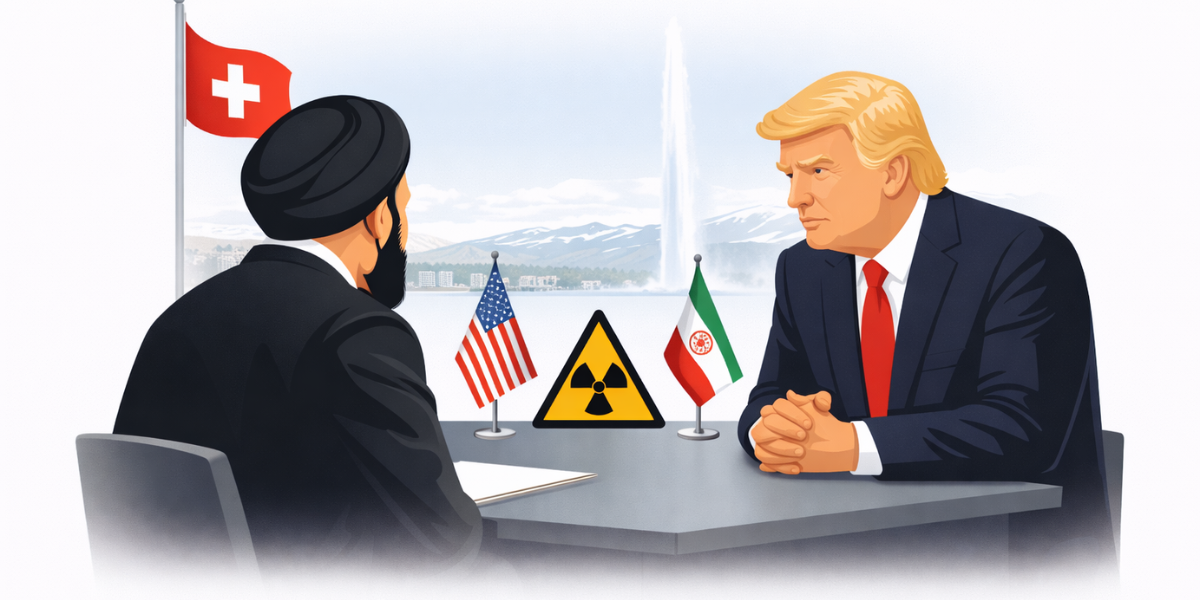
The second round of US-Iran nuclear talks in Geneva has drawn global attention, as former and current US political heavyweight Donald Trump pushes for a renewed nuclear agreement with the Islamic Republic of Iran. With rising tensions in the Middle East and global concerns over uranium enrichment, the Geneva negotiations could shape the future of regional stability and international diplomacy.
The high-stakes talks aim to address nuclear development limits, sanctions relief, and broader geopolitical security issues.
Background: Collapse of the 2015 Iran Nuclear Deal
The current negotiations stem from the collapse of the Joint Comprehensive Plan of Action (JCPOA), originally signed in 2015 between Iran and world powers. The deal placed limits on Iran’s nuclear program in exchange for sanctions relief.
In 2018, the United States withdrew from the agreement under the Trump administration, leading to renewed sanctions and escalating tensions. Since then, Iran has expanded uranium enrichment activities, raising international concerns over nuclear proliferation.
Geneva Talks Round 2: What Is Being Negotiated?
The second round of talks in Geneva focuses on several critical issues:
- Limits on Iran’s uranium enrichment levels
- International Atomic Energy Agency (IAEA) inspections
- Gradual lifting of US economic sanctions
- Regional security guarantees
Diplomats are also discussing prisoner exchanges and humanitarian access, which could serve as confidence-building measures in the negotiations.
Donald Trump’s Strategy in the US-Iran Nuclear Talks
Donald Trump has consistently advocated for what he calls a “stronger and longer” nuclear deal. His strategy reportedly includes:
- Expanding restrictions beyond nuclear issues to include missile programs
- Strengthening verification mechanisms
- Increasing diplomatic pressure through economic leverage
Trump argues that a revised agreement must ensure long-term regional security while preventing Iran from obtaining nuclear weapons capability.
Iran’s Position: Sanctions Relief and Sovereignty
Iranian officials have emphasized that sanctions relief remains a primary demand. Tehran insists on economic guarantees before scaling back nuclear activities.
Iran’s key demands include:
- Immediate removal of US sanctions
- Protection against future unilateral withdrawals
- Recognition of its peaceful nuclear energy rights
The negotiation dynamics remain complex, as both sides seek political and diplomatic concessions.
Role of Global Powers and the IAEA
International stakeholders, including European nations and the International Atomic Energy Agency, are closely monitoring the talks. The IAEA plays a crucial role in verifying Iran’s nuclear compliance and ensuring transparency.
Global markets are also reacting to the developments, particularly in oil prices, given Iran’s significant role in global energy supply.
What’s at Stake for the Middle East?
The outcome of the Geneva talks could significantly impact:
- Middle East geopolitical stability
- US-Iran diplomatic relations
- Regional alliances and security arrangements
- Global energy markets
A successful agreement could ease tensions, while failure may escalate sanctions, military risks, and economic uncertainty.
Can Trump Secure a Deal?
Securing a deal in Round 2 will depend on balancing domestic political pressures, diplomatic flexibility, and regional security concerns. While optimism exists, significant gaps remain between Washington and Tehran.
Analysts suggest that incremental agreements or interim deals may be more realistic than a comprehensive long-term settlement at this stage.
Conclusion: A Defining Moment in Nuclear Diplomacy
The second round of US-Iran nuclear talks in Geneva represents a critical moment in global diplomacy. With Donald Trump seeking to reshape the nuclear agreement framework and Iran demanding economic relief, the negotiations carry far-reaching implications for international security and global markets.
Whether Round 2 results in a breakthrough or continued deadlock, the Geneva talks will influence the future of US-Iran relations and nuclear non-proliferation efforts worldwide.
Also read: Tarique Rahman Oath Ceremony: Impact of BNP Government on Bangladesh’s Economy and Foreign Policy
Add News Pixel as preferred source on Google- Click here
Last Updated on: Tuesday, February 17, 2026 3:58 pm by News Pixel Team | Published by: News Pixel Team on Tuesday, February 17, 2026 3:58 pm | News Categories: Politics, Latest, Opinion
About The Author

Comment here