
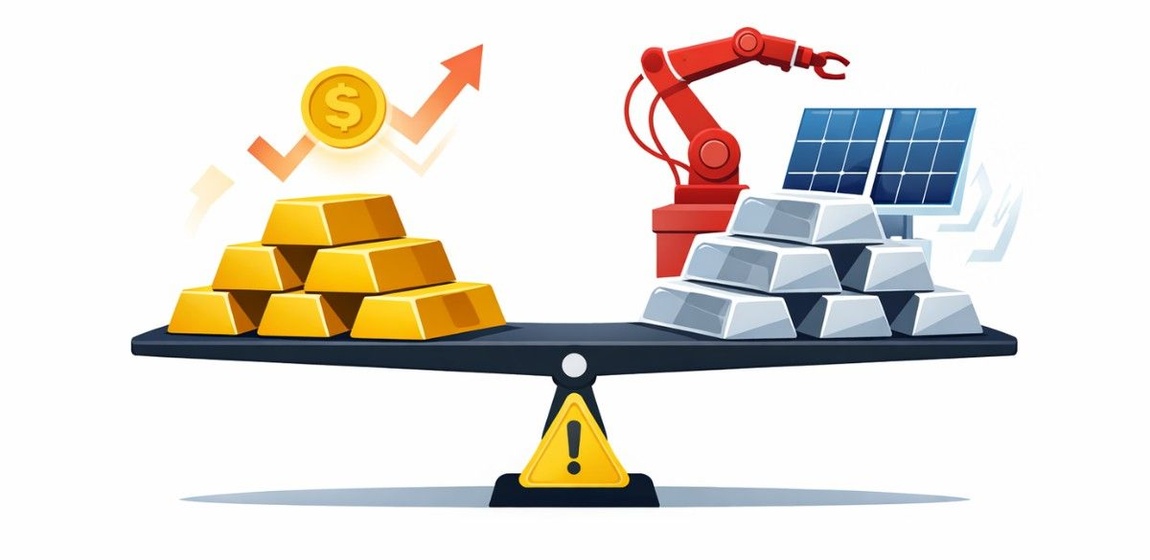
The debate around gold vs. silver investment has traditionally focused on stability versus volatility. Gold has long been considered a safe-haven asset, while silver has been viewed as a more affordable alternative with higher price swings. In 2026, however, industrial demand is transforming the way investors evaluate both metals. The global expansion of renewable energy, electric vehicles, and advanced technology manufacturing is giving silver a new strategic importance, changing long-standing investment patterns.
Gold Investment in 2026: The Anchor of Stability
Gold continues to hold its position as a store of value during economic uncertainty. Investors rely on gold to hedge against inflation, currency fluctuations, and geopolitical tensions. Central banks across the world maintain significant gold reserves, reinforcing its credibility and long-term security.
In 2026, ongoing economic uncertainties and cautious monetary policies are keeping gold attractive for conservative investors. Its lower volatility compared to silver makes it a preferred option for wealth preservation and portfolio diversification.
Silver Investment in 2026: Beyond a Precious Metal
Unlike gold, silver plays a dual role as both an investment asset and an industrial commodity. In 2026, industrial demand is becoming the dominant force behind silver price movements. Silver is widely used in solar panels, electric vehicle components, semiconductors, and medical technologies.
The global push toward clean energy and digital infrastructure has significantly increased silver consumption. As industrial usage expands, supply pressures are influencing price trends, making silver more responsive to economic growth cycles.
Industrial Demand: The Game Changer
Industrial demand is redefining the gold vs. silver investment comparison. The expansion of renewable energy projects and electric mobility is driving consistent silver consumption. Solar power installations require substantial amounts of silver for photovoltaic cells, while electric vehicles use silver in battery systems and electronic connections.
This demand shift means silver prices are increasingly influenced by manufacturing output and technological expansion rather than purely investment sentiment. As a result, silver’s growth potential in 2026 is closely tied to global industrial performance.
Volatility and Risk Considerations
Gold generally experiences more stable price movements because its demand is primarily investment-driven. Silver, on the other hand, reacts to both investor sentiment and industrial production data. During periods of strong economic growth, silver may outperform gold due to rising industrial demand. However, during economic slowdowns, reduced manufacturing activity can weigh on silver prices.
This dual nature makes silver potentially more rewarding but also riskier compared to gold. Investors must assess their risk tolerance when choosing between the two.
Inflation, Interest Rates, and Market Trends
Inflation and interest rate trends continue to influence both metals in 2026. Gold often performs well when inflation rises and real interest rates remain low. Silver, while also benefiting from inflation hedging, responds strongly to industrial expansion and infrastructure investment.
Global supply chain dynamics, mining production constraints, and renewable energy investments are key factors shaping the gold vs. silver investment outlook this year.
Portfolio Strategy in 2026
Rather than choosing one over the other, many investors are adopting a balanced precious metals strategy. Gold offers stability and downside protection, while silver provides exposure to industrial growth and technological advancement.
A diversified allocation between gold and silver can help manage risk while capturing growth opportunities linked to clean energy and digital transformation trends.
Long-Term Outlook: Changing Investment Rules
The traditional view of gold as purely defensive and silver as speculative is evolving. In 2026, industrial demand is giving silver a structural growth narrative that did not dominate previous decades. However, gold’s role as a financial safe haven remains firmly intact.
The future of gold vs. silver investment will depend on global economic growth, technological innovation, and energy transition policies. Investors who understand these changing dynamics can make more informed decisions in a rapidly evolving market environment.
Conclusion: Adapting to the New Precious Metals Era
Industrial demand is changing the rules of gold vs. silver investment in 2026. While gold continues to provide security and stability, silver is emerging as a strategic asset tied to global industrial expansion. The modern investor must look beyond traditional assumptions and consider how technology and energy transitions are reshaping the precious metals market.
Also read : The Rise of Biometric Security in Healthcare: Balancing Efficiency and Data Privacy
Add News Pixel as a preferred source on Google – Click Here
Last Updated on: Tuesday, March 3, 2026 2:43 pm by News Pixel Team | Published by: News Pixel Team on Tuesday, March 3, 2026 2:43 pm | News Categories: India, Latest, Trending
About The Author

Comment here