
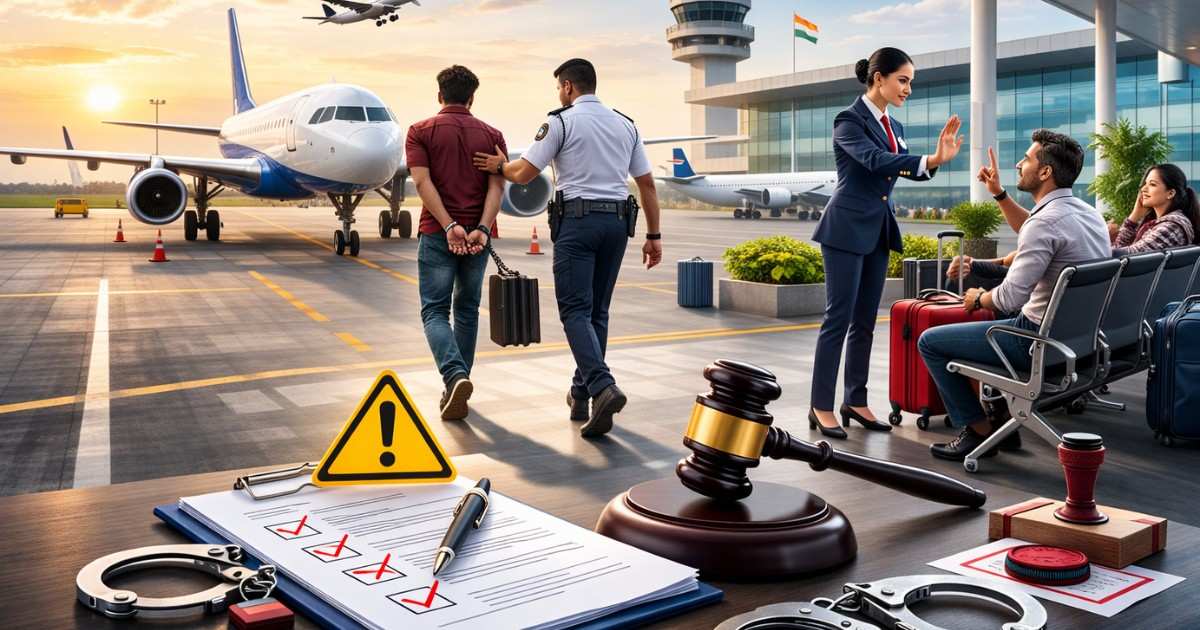
India’s aviation regulator, the Directorate General of Civil Aviation (DGCA), has introduced stricter enforcement measures to address unruly passenger behaviour and serious safety violations following a series of domestic and international flight disruptions. The revised framework includes immediate 30-day flying bans for certain offences and the classification of cockpit breaches as the most severe category of misconduct.
The regulator said the changes are aimed at strengthening onboard safety, ensuring faster action by airlines, and creating uniformity in how incidents are handled across the aviation sector.
Immediate Bans for Serious Misconduct
Under the updated rules, airlines are now required to impose an immediate 30-day ban on passengers whose behaviour meets the threshold for serious unruly conduct. Earlier, such cases often went through extended internal reviews before penalties were enforced. The DGCA has said delays in action weaken deterrence and can compromise safety.
Unruly behaviour continues to be classified into different levels based on severity, but the revised guidelines make enforcement timelines stricter. For more serious cases, airlines must act first and complete formal reviews later. Longer bans, including those extending beyond 30 days, may still be imposed after examination by an internal committee.
Cockpit Breaches Classified as Level 4
A key feature of the new framework is the reclassification of cockpit-related violations. Any unauthorised attempt to enter the cockpit, interfere with flight crew, or compromise cockpit security will now be treated as a Level 4 offence, the highest category under aviation safety norms.
Level 4 violations can result in extended or permanent flying bans and may also attract action under relevant security and criminal laws. The DGCA has underlined that cockpit security is fundamental to flight safety and that such violations will not be tolerated under any circumstances.
Tighter Responsibilities for Airlines
The regulator has placed clear responsibilities on airlines to ensure effective implementation. Carriers must report incidents without delay, maintain proper documentation, and convene internal committees within prescribed timelines. Failure to follow these procedures could invite regulatory action.
Airlines have also been directed to ensure that cabin crew and ground staff are trained to manage disruptive situations, record incidents accurately, and follow escalation protocols. While de-escalation remains the preferred first step, the DGCA has made it clear that enforcement must follow if passenger behaviour poses a safety risk.
Background of Recent Incidents
The stricter stance follows a noticeable increase in reported cases of passenger misconduct, including refusal to comply with safety instructions, verbal abuse of crew, and interference with flight operations. Such incidents have led to delays, diversions, and operational disruptions, prompting concerns from regulators and airlines.
Aviation officials have noted that rising passenger volumes and operational pressures do not justify lapses in safety or discipline. The updated rules are intended to reinforce accountability and reduce the frequency of such incidents.
Legal Framework and Due Process
The DGCA has said the enforcement measures are supported by existing civil aviation regulations and aviation security laws. In serious cases, airlines may be required to coordinate with law enforcement agencies.
Passengers placed on no-fly lists will be informed of the reason and duration of the ban, in line with due process requirements. At the same time, the regulator has cautioned that procedural delays or misuse of appeals will not be allowed to dilute safety enforcement.
Emphasis on Safety and Compliance
Industry stakeholders believe the clearer penalty structure could improve compliance by setting defined consequences for specific actions. By reducing ambiguity, the DGCA aims to create a stronger deterrent against misconduct.
Passengers have been advised to familiarise themselves with in-flight conduct rules and to comply with crew instructions at all times. The regulator has reiterated that aviation safety depends on cooperation between passengers, airlines, and authorities.
With air travel continuing to grow, the DGCA’s “zero tolerance” approach signals a firm focus on safety over convenience. The regulator has said it will closely monitor implementation and take further steps if violations continue, reinforcing that maintaining order on board aircraft is essential to the safe functioning of India’s aviation system.
Also read: The ‘MANAV Vision’: What PM Modi’s Human-Centric AI Plan Means for Your Job in 2026
Add News Pixel as a preferred source on Google – Click Here
Last Updated on: Thursday, February 19, 2026 2:46 pm by News Pixel Team | Published by: News Pixel Team on Thursday, February 19, 2026 2:46 pm | News Categories: Business
About The Author

Comment here