
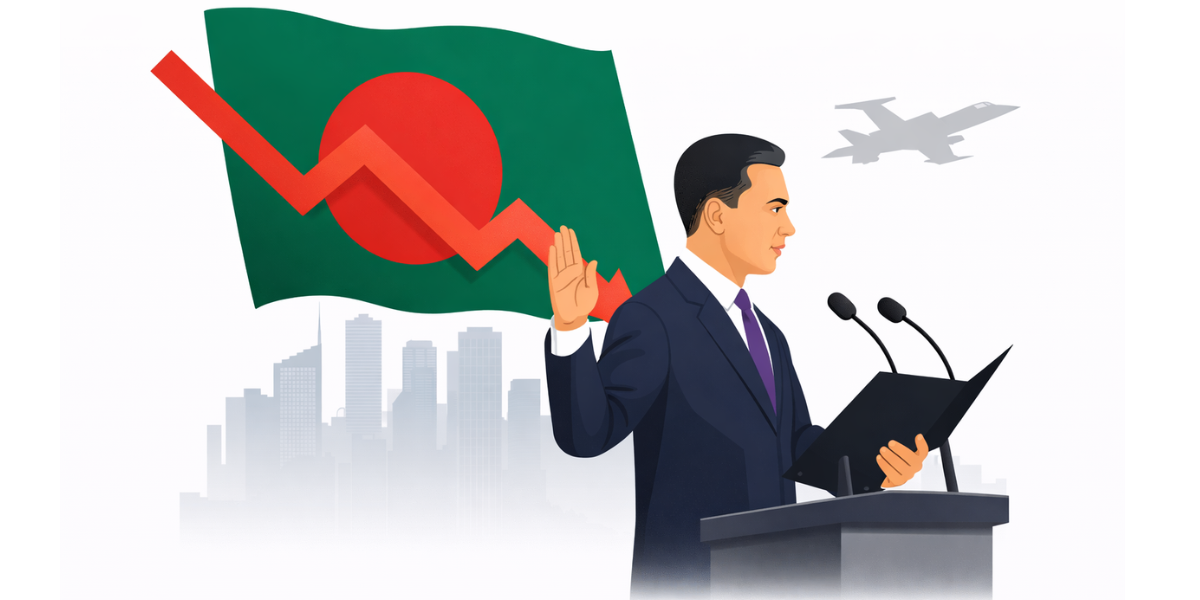
The swearing-in of Tarique Rahman marks a major turning point in Bangladesh politics. With the return of the Bangladesh Nationalist Party (BNP) to power, the country may witness significant changes in governance, economic policy, foreign relations, and democratic institutions.
The BNP’s comeback signals a new chapter in Bangladesh’s political landscape, reshaping both domestic politics and regional diplomacy in South Asia.
Bangladesh Political Shift 2026: BNP’s Return to Power
The return of the Bangladesh Nationalist Party (BNP) represents a shift in the nation’s political direction after years of intense political competition. Political analysts suggest that this transition could redefine governance priorities, strengthen opposition dynamics, and alter long-standing political narratives.
The BNP has historically positioned itself as a nationalist and center-right political force. Its return is expected to bring renewed focus on electoral reforms, institutional restructuring, and administrative accountability.
Economic Policy: What Changes Can Bangladesh Expect?
One of the biggest questions following Tarique Rahman’s swearing-in is how the new BNP-led government will manage Bangladesh’s economy.
Key economic focus areas may include:
- Foreign direct investment (FDI) reforms
- Export diversification beyond garments
- Currency stabilization and inflation control
- Youth employment generation
Bangladesh’s economic growth trajectory has been closely linked to its export-driven model. The BNP government may prioritize policy adjustments aimed at boosting private sector investment and strengthening small and medium enterprises (SMEs).
Impact on Bangladesh-India Relations
The return of the BNP could influence diplomatic relations between Bangladesh and neighboring India. Historically, BNP and its rival political groups have had differing approaches toward India.
Regional cooperation on trade, border security, and water-sharing agreements may see renewed negotiations under the new leadership. South Asian geopolitics will closely monitor how Tarique Rahman balances relations with India and other global powers.
Bangladesh-China and Global Foreign Policy Outlook
Apart from India, Bangladesh maintains strategic ties with global players such as China, the United States, and the European Union. The BNP’s return may recalibrate foreign investment agreements, infrastructure projects, and trade partnerships.
Observers suggest that the new government could focus on multi-alignment diplomacy—balancing relations between major global powers while protecting national interests.
Governance, Democracy and Institutional Reform
Another critical area will be governance reforms and democratic institutions. The BNP has emphasized the need for electoral transparency, judicial independence, and freedom of expression.
The swearing-in ceremony of Tarique Rahman signals the beginning of a potential reform-driven administration. Whether these promises translate into measurable democratic reforms will be closely observed by international organizations and human rights groups.
Public Reaction and Political Stability
Public response to the BNP’s return has been mixed. Supporters view it as a restoration of political balance, while critics express concerns over policy shifts and governance direction.
Political stability will play a crucial role in ensuring economic confidence and foreign investment inflows. The coming months will determine whether Bangladesh experiences smooth political transition or heightened political debate.
What Lies Ahead for Bangladesh?
The swearing-in of Tarique Rahman marks a defining political moment. The BNP’s return to power may influence:
- Economic reforms and fiscal policy
- Regional and global diplomatic strategies
- Institutional and democratic reforms
- Investor confidence and development projects
As Bangladesh enters this new political phase, the direction taken by the BNP-led government will shape the country’s future trajectory in South Asia.
Conclusion
The oath-taking of Tarique Rahman represents more than a political ceremony—it signals a broader transformation in Bangladesh’s governance and policy priorities. With the BNP back in leadership, attention now turns to how effectively the new administration delivers on its promises of economic growth, democratic reforms, and stable foreign relations.
The coming years will be crucial in determining whether this political transition strengthens Bangladesh’s democratic institutions and economic resilience.
Also read : India-AI Impact Summit 2026: Key Announcements by PM Modi and French President Emmanuel Macron
Add News Pixel as preferred source on Google- Click here
Last Updated on: Tuesday, February 17, 2026 3:41 pm by News Pixel Team | Published by: News Pixel Team on Tuesday, February 17, 2026 3:41 pm | News Categories: Politics

Leave a Reply