
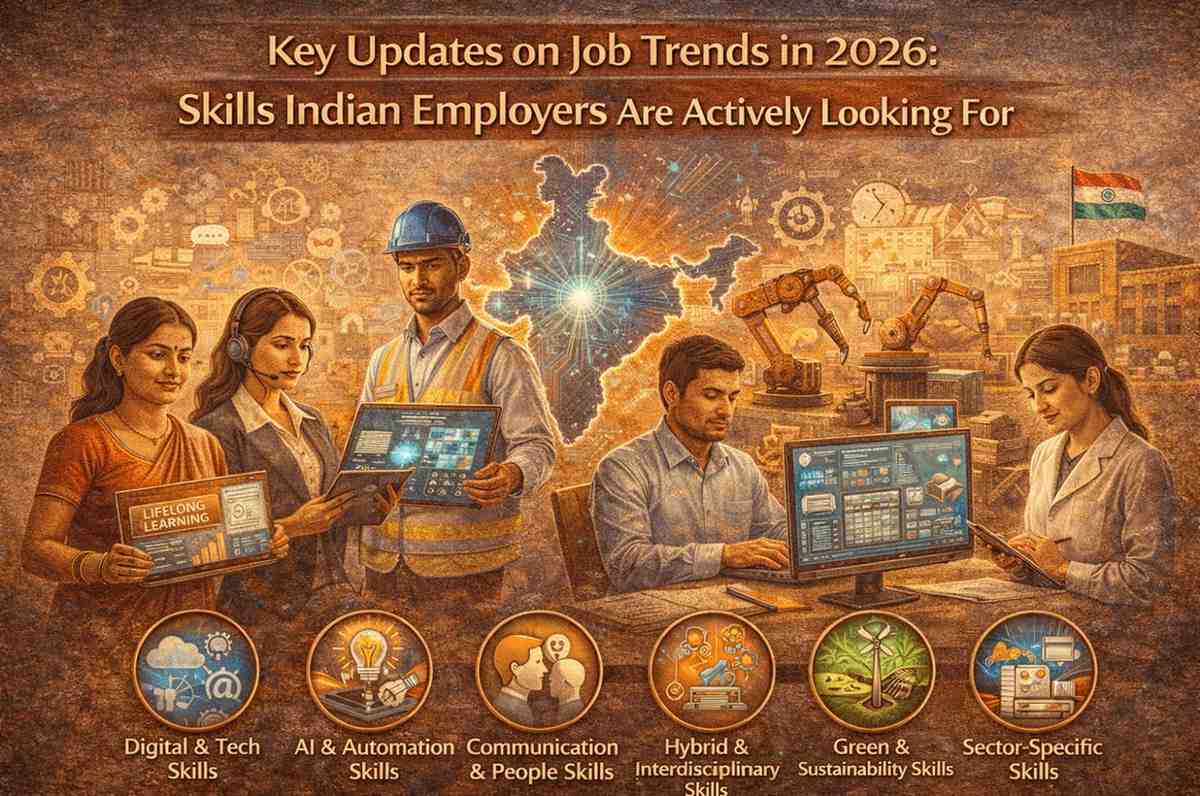
India’s job market is undergoing a rapid transformation as technological change, economic shifts, and evolving business models reshape how and where people work. By 2026, employers across sectors are expected to place greater emphasis on adaptable skill sets that combine technical knowledge with human capabilities. Understanding these trends is crucial for students, job seekers, and professionals planning their careers in a competitive and dynamic environment.
Changing Nature of Work in India
The nature of work in India is moving away from rigid, role-specific functions toward more flexible and project-based models. Automation, digital platforms, and remote work have altered traditional employment structures, encouraging organisations to seek employees who can learn quickly and adapt to changing responsibilities.
Companies are increasingly valuing problem-solving ability, cross-functional collaboration, and comfort with digital tools. This shift reflects a broader move toward agility and innovation as businesses respond to market uncertainty and global competition.
High Demand for Digital and Technology Skills
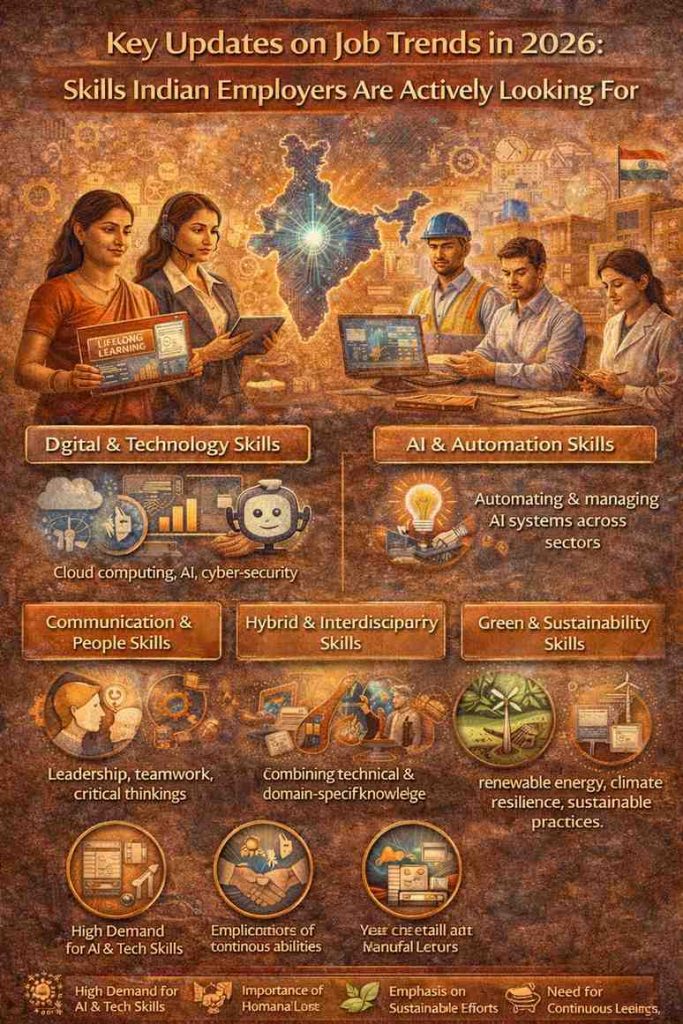
Digital skills continue to dominate employer requirements as technology becomes central to nearly every industry. Skills related to data analysis, cybersecurity, cloud computing, and artificial intelligence are in particularly high demand. Even non-technical roles increasingly require familiarity with digital platforms and data-driven decision-making.
Employers are looking for professionals who can not only use technology but also understand its business impact. This includes the ability to interpret insights, automate workflows, and improve efficiency through digital solutions.
Growing Importance of AI and Automation Skills
As artificial intelligence and automation tools become more widespread, employers are seeking talent that can work alongside these technologies. Skills related to AI implementation, model training, ethical use of technology, and system oversight are gaining importance.
Rather than replacing human roles entirely, automation is changing job profiles. Employees who can manage, supervise, and enhance automated systems are likely to see strong demand across industries such as manufacturing, finance, healthcare, and logistics.
Focus on Soft Skills and Human-Centric Abilities
Despite the emphasis on technology, human skills remain critical in the 2026 job market. Communication, leadership, emotional intelligence, and critical thinking are increasingly valued as organisations recognise the limits of automation.
Employers seek individuals who can collaborate effectively, manage teams, and navigate complex interpersonal dynamics. These skills are especially important in client-facing roles, management positions, and creative functions where human judgment and empathy are essential.
Rise of Hybrid and Interdisciplinary Skill Sets
Job roles are becoming more interdisciplinary, blending technical expertise with domain knowledge. For example, professionals in marketing are expected to understand data analytics, while engineers may need awareness of business strategy and user experience.
Employers are prioritising candidates who can bridge gaps between departments and contribute across functions. This trend encourages continuous learning and the ability to combine skills from multiple fields.
Demand for Green and Sustainability Skills
Sustainability is emerging as a key focus area for Indian employers, driven by regulatory requirements, investor expectations, and environmental concerns. Skills related to renewable energy, environmental management, sustainable supply chains, and climate risk assessment are gaining traction.
Organisations across sectors are integrating sustainability into their operations, creating new job opportunities for professionals with expertise in green technologies and responsible business practices.
Emphasis on Lifelong Learning and Upskilling
Rapid changes in technology and business models mean that skills can become outdated quickly. Employers in 2026 are expected to place high value on a willingness to learn and upskill continuously.
Certifications, online courses, and practical training are increasingly recognised alongside traditional degrees. Professionals who demonstrate adaptability and a proactive approach to learning are more likely to remain relevant in the evolving job market.
Sector-Specific Trends Shaping Employment
Different sectors are experiencing unique shifts in skill requirements. Healthcare is seeing increased demand for digital health expertise and data-driven patient care. The education sector values skills in online teaching and curriculum design. Manufacturing is focusing on automation, quality control, and smart factory technologies.
Understanding sector-specific trends can help job seekers align their skills with emerging opportunities and avoid mismatches between qualifications and market needs.
Changing Employer Expectations in Hiring
Employers are refining their hiring processes to focus more on skills and potential rather than solely on academic credentials. Practical experience, project work, and demonstrated problem-solving ability are increasingly important in recruitment decisions.
This shift creates opportunities for candidates from diverse educational backgrounds, provided they can showcase relevant skills and competencies.
What This Means for Job Seekers and Students
For job seekers and students, the 2026 job market demands strategic preparation. Building a strong foundation in digital literacy, developing soft skills, and staying informed about industry trends are essential steps.
Career planning is no longer a one-time decision but an ongoing process. Those who actively invest in their skills and remain flexible in their career paths will be better positioned to navigate future changes.
The Road Ahead
The job trends shaping India’s workforce in 2026 reflect a broader transformation in how work is defined and valued. Employers are looking for a balance of technical expertise, human skills, and adaptability in an uncertain and fast-changing world.
Key updates make it clear that success in the coming years will depend not just on what individuals know today, but on how effectively they continue to learn, adapt, and contribute. As the job market evolves, aligning skills with emerging employer expectations will be critical for long-term career growth.
Add newspixel.in as preferred source on google – click here
Last Updated on: Thursday, January 22, 2026 1:06 pm by News Pixel Team | Published by: News Pixel Team on Thursday, January 22, 2026 1:06 pm | News Categories: India

Leave a Reply