
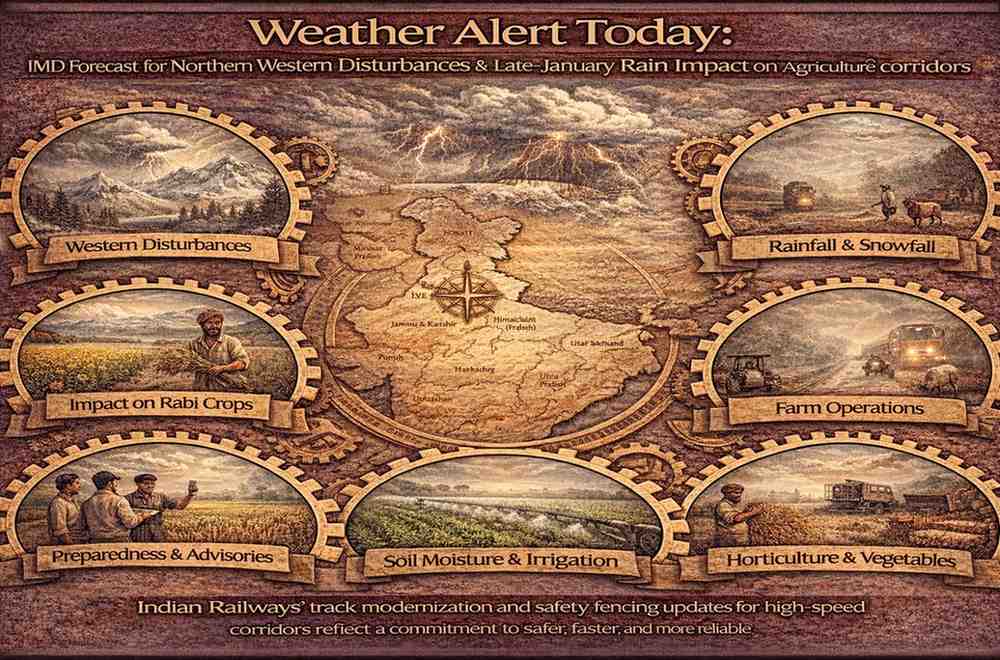
India’s winter weather pattern is witnessing renewed activity as western disturbances affect large parts of northern India. According to the latest forecasts, late-January rainfall and snowfall linked to these systems are expected to influence temperatures, visibility, and agricultural activity across several states. For farmers, policymakers, and residents, understanding the nature of these weather systems and their potential impact is crucial, especially during the rabi crop season.
What Are Western Disturbances and Why They Matter
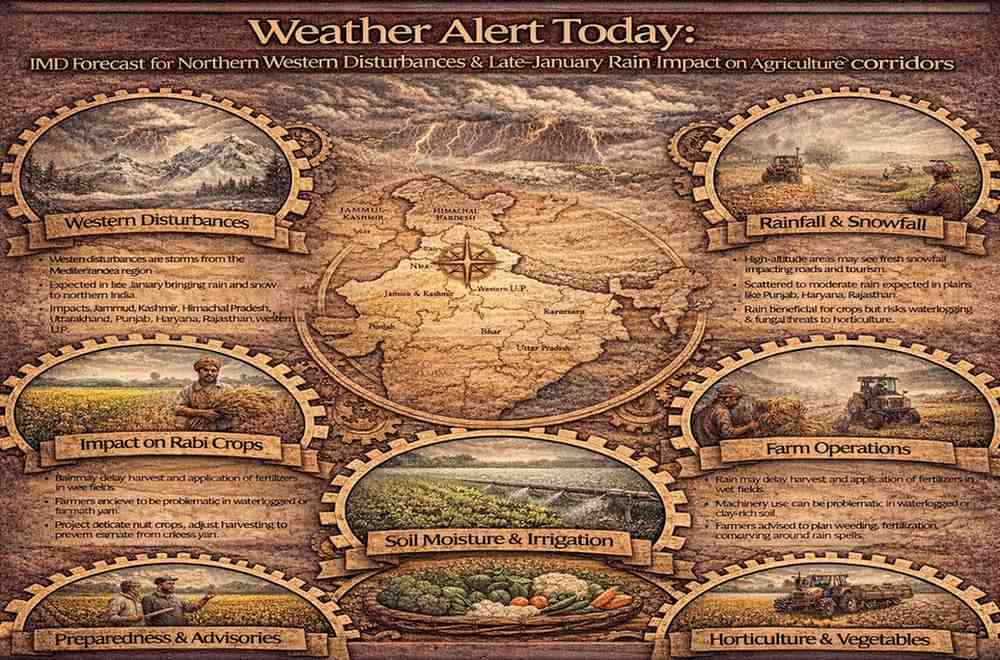
Western disturbances are extra-tropical weather systems that originate over the Mediterranean region and travel eastward toward the Indian subcontinent. During winter months, they are the primary source of rainfall and snowfall in northwestern India, particularly across Jammu and Kashmir, Himachal Pradesh, Uttarakhand, Punjab, Haryana, and parts of Rajasthan and western Uttar Pradesh.
These systems play a critical role in maintaining winter precipitation patterns. While they are essential for replenishing soil moisture and sustaining crops, their intensity and timing can also disrupt daily life and agricultural schedules.
IMD’s Latest Forecast for Northern India
The India Meteorological Department has indicated that an active western disturbance is expected to impact northern India during the latter half of January. The system is likely to bring light to moderate rainfall over the plains and snowfall in higher reaches of the Himalayas.
Cloud cover associated with the disturbance is also expected to influence minimum temperatures, potentially preventing severe cold spells in some regions while increasing humidity and fog conditions in others. For urban areas, this could mean reduced visibility and disruptions to transport, while rural regions will see more direct agricultural implications.
Expected Rainfall and Snowfall Patterns
Rainfall from the late-January western disturbance is expected to be unevenly distributed. Hill states are likely to experience fresh snowfall, particularly in higher altitudes, which could impact road connectivity and tourism.
In the plains, scattered to moderate rainfall is forecast across Punjab, Haryana, western Uttar Pradesh, and parts of Rajasthan. While rainfall amounts may not be extreme, even light precipitation at this stage of winter can significantly influence soil conditions and crop health.
Impact on Rabi Crops
Rabi crops such as wheat, mustard, barley, and gram are at critical growth stages in late January. Rainfall associated with western disturbances is generally beneficial for these crops, as it improves soil moisture and supports grain formation.
Adequate winter rain reduces the need for irrigation, lowers input costs for farmers, and can contribute to higher yields. However, excess moisture or prolonged cloudy conditions can increase the risk of fungal diseases, particularly in mustard and vegetables. Farmers will need to monitor fields closely following rainfall.
Effect on Horticulture and Vegetable Crops
Vegetable and horticultural crops are more sensitive to changes in temperature and humidity. Late-January rain can benefit crops like peas, potatoes, and leafy vegetables by improving moisture availability.
At the same time, sudden rainfall followed by cold conditions may damage delicate crops or affect harvest schedules. Orchard crops in northern states could also see impacts if cloud cover persists, influencing flowering and fruit-setting stages.
Temperature Trends and Cold Conditions
Western disturbances often moderate extreme cold by increasing cloud cover and humidity. While this can reduce the intensity of cold waves, it may also lead to higher night-time temperatures and persistent fog in the plains.
Foggy conditions can disrupt road, rail, and air travel, particularly in northern India. For farmers, reduced sunlight during extended cloudy periods can slow crop growth, especially for crops that rely on winter sunshine.
Soil Moisture and Irrigation Planning
One of the most significant agricultural benefits of winter rainfall is improved soil moisture. Rain from western disturbances helps recharge upper soil layers, reducing dependence on groundwater and canal irrigation.
In regions facing declining water tables, this natural moisture is particularly valuable. Farmers may adjust irrigation schedules following rainfall, conserving water and energy during the later stages of the rabi season.
Challenges for Harvest and Farm Operations
While rainfall is generally beneficial, it can temporarily disrupt farm operations. Wet fields may delay weeding, fertiliser application, or harvesting of early-maturing crops.
Machinery movement can become difficult in waterlogged fields, especially in areas with clay-rich soils. Farmers may need to plan operations carefully around rainfall windows to minimise losses and delays.
Broader Economic and Food Supply Implications
Weather patterns during the rabi season have implications beyond individual farms. Crop performance influences food supply, market arrivals, and price trends in the months ahead.
Favourable rainfall can support stable production and help contain food inflation, while weather-related disruptions can affect supply chains. Policymakers and market participants closely monitor IMD forecasts to anticipate potential impacts on agricultural output.
Preparedness and Advisory Measures
Agricultural departments and extension services often issue advisories during active western disturbance periods. These advisories may include guidance on disease management, irrigation adjustments, and protective measures for vulnerable crops.
Farmers are encouraged to stay updated with local weather bulletins and follow recommended practices to maximise benefits and minimise risks associated with rainfall and temperature changes.
The Bigger Picture
Late-January western disturbances are a normal and essential part of India’s winter climate system. Their impact on agriculture is largely positive when rainfall is well-distributed and moderate.
However, changing climate patterns have increased variability in weather systems, making timely forecasts and preparedness more important than ever. Accurate IMD predictions allow farmers, administrators, and communities to respond proactively rather than reactively.
What to Expect in the Coming Days
As the current western disturbance moves across northern India, rainfall and snowfall activity is expected to gradually taper off toward the end of the period. Residual cold and fog conditions may persist in some regions even after precipitation ends.
For agriculture, the coming days will be critical in determining how effectively the rainfall supports rabi crops without introducing new challenges. Weather alert today is not just about immediate conditions, but about how late-January rains shape the rest of the winter season and influence agricultural outcomes in the months ahead.
Add newspixel.in as preferred source on google – click here
Last Updated on: Wednesday, January 28, 2026 1:46 pm by News Pixel Team | Published by: News Pixel Team on Wednesday, January 28, 2026 1:46 pm | News Categories: India
About The Author

Comment here