
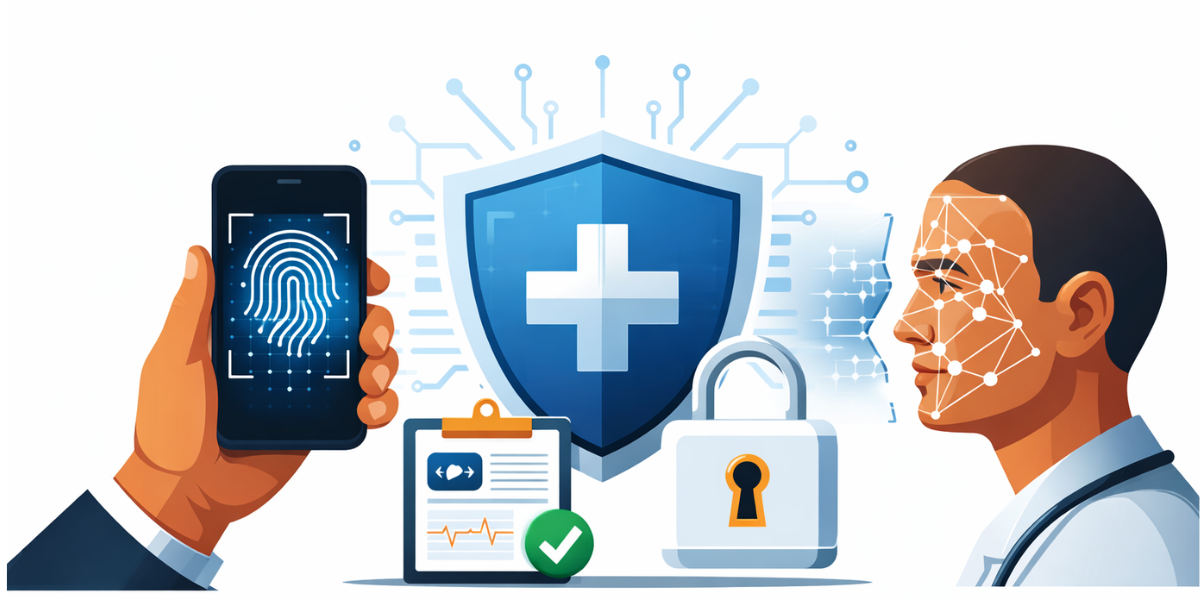
The healthcare industry is undergoing rapid digital transformation. From electronic health records to telemedicine platforms, hospitals and clinics are increasingly dependent on digital systems. As cyber threats grow more sophisticated, traditional password-based security is proving insufficient. This has led to the rise of biometric security in healthcare, a system that uses unique biological traits such as fingerprints, facial recognition, iris scans, and voice patterns to verify identity.
While biometric security enhances efficiency and patient safety, it also raises critical concerns about data privacy and ethical governance.
What Is Biometric Security in Healthcare?
Biometric security in healthcare refers to the use of physical or behavioral characteristics to authenticate patients, medical staff, and administrators. Unlike passwords or ID cards, biometric identifiers cannot easily be lost, forgotten, or stolen.
Common biometric technologies used in healthcare include:
- Fingerprint authentication for staff access
- Facial recognition for patient identification
- Iris scanning for high-security zones
- Voice recognition for telehealth verification
These systems are integrated with electronic medical records (EMR) and hospital management software to streamline operations.
Why Healthcare Is Adopting Biometric Security
Healthcare institutions manage highly sensitive patient data, making them prime targets for cyberattacks. Data breaches can expose medical histories, insurance information, and personal identification details.
Biometric security in healthcare helps:
- Reduce identity fraud
- Prevent unauthorized access to patient records
- Improve accuracy in patient identification
- Eliminate password-related vulnerabilities
- Accelerate check-in and treatment processes
By minimizing human error and strengthening access control, biometric systems enhance both operational efficiency and patient safety.
Improving Efficiency Through Biometric Technology
One of the major advantages of biometric security in healthcare is workflow optimization. Hospitals often struggle with long queues, paperwork delays, and administrative bottlenecks.
Biometric authentication allows:
- Faster patient registration
- Instant staff login to medical systems
- Reduced duplication of medical records
- Improved medication administration accuracy
In emergency scenarios, rapid identification through biometrics can save critical minutes, directly impacting patient outcomes.
Data Privacy Concerns and Ethical Challenges
Despite its benefits, biometric security in healthcare introduces serious privacy considerations. Biometric data is permanent. Unlike passwords, fingerprints or iris patterns cannot be changed if compromised.
Key privacy risks include:
- Data breaches involving biometric templates
- Unauthorized surveillance
- Secondary use of biometric data without consent
- Cross-database tracking risks
Healthcare providers must ensure strict encryption standards, limited data retention policies, and transparent consent mechanisms.
Regulatory Compliance and Data Protection
Governments worldwide enforce strict data protection laws for medical information. Healthcare organizations implementing biometric systems must comply with regulations such as data protection acts and healthcare privacy laws.
Compliance requirements typically include:
- Explicit patient consent
- Secure storage and encryption of biometric data
- Limited access controls
- Regular cybersecurity audits
- Data minimization practices
Balancing biometric efficiency with regulatory compliance is essential to maintain trust and avoid legal penalties.
The Role of Encryption and Secure Architecture
Advanced encryption plays a vital role in protecting biometric data. Instead of storing raw biometric images, modern systems use encrypted mathematical templates.
Best practices for biometric security in healthcare include:
- Multi-factor authentication integration
- Decentralized data storage models
- Zero-trust security frameworks
- Continuous system monitoring
Layered security architecture reduces the risk of unauthorized access and strengthens overall cybersecurity posture.
Patient Trust and Transparency
Trust is the foundation of healthcare delivery. Patients must feel confident that their personal and biometric data is protected.
Healthcare institutions can build trust by:
- Clearly explaining how biometric data is used
- Offering opt-in and opt-out options
- Publishing privacy policies
- Conducting independent security assessments
Transparency reduces fear and enhances patient acceptance of biometric technologies.
The Future of Biometric Security in Healthcare
Biometric technology is expected to evolve with advancements in artificial intelligence and decentralized identity systems. Contactless biometrics, behavioral biometrics, and blockchain-based identity verification may further enhance security while preserving privacy.
However, the future success of biometric security in healthcare will depend on maintaining the balance between innovation and ethical responsibility.
Conclusion: Striking the Right Balance
The rise of biometric security in healthcare marks a significant shift toward stronger identity verification and operational efficiency. While the benefits are substantial, the risks associated with biometric data privacy cannot be ignored.
Healthcare organizations must adopt a balanced approach — combining technological innovation, regulatory compliance, and transparent governance. By doing so, they can harness the power of biometric security while protecting the sensitive data that patients entrust to them.
In the digital healthcare era, efficiency and privacy must advance together.
Also read: Surviving the 10% Global Tariff: Strategic Supply Chain Lessons for Modern Exporters
Add News Pixel as a preferred source on Google – Click Here
Last Updated on: Saturday, February 21, 2026 5:00 pm by News Pixel Team | Published by: News Pixel Team on Saturday, February 21, 2026 5:00 pm | News Categories: Technology, Latest
About The Author

Comment here