
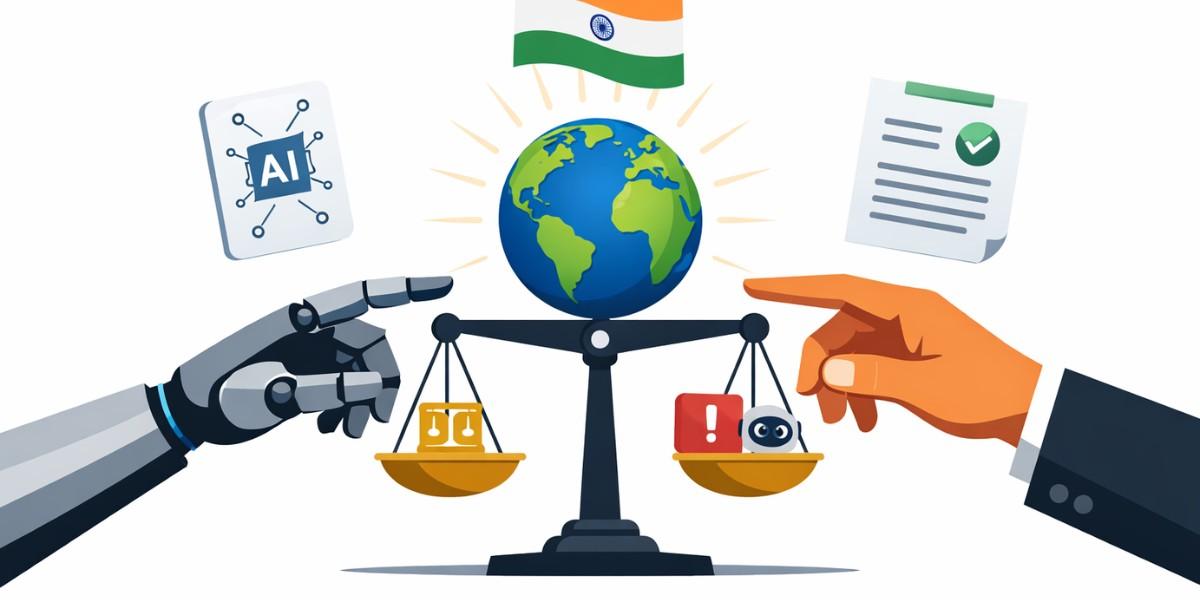
The global conversation around Ethical AI has reached a turning point with the adoption of the Delhi Declaration. As artificial intelligence becomes central to digital transformation, governments and corporations are under increasing pressure to ensure responsible, transparent, and accountable AI systems.
The Delhi Declaration sets the tone for international cooperation in building Ethical AI frameworks, ensuring innovation does not compromise privacy, fairness, or human rights. For businesses, this signals a shift from optional compliance to strategic necessity.
What Is the Delhi Declaration on Ethical AI?
The Delhi Declaration is a multilateral commitment focused on promoting responsible AI development, global governance standards, and cross-border collaboration. It emphasizes:
- Transparency in AI systems
- Fairness and bias mitigation
- Data protection and privacy
- Accountability in AI decision-making
- Inclusive and human-centric AI innovation
The declaration aligns with broader global AI governance efforts and highlights the importance of Ethical AI principles in shaping the digital economy.
Why Ethical AI Matters for Businesses
Businesses today rely heavily on AI for automation, customer analytics, cybersecurity, hiring, healthcare solutions, and financial services. However, unregulated AI systems can lead to:
- Algorithmic bias
- Data breaches
- Discrimination in hiring or lending
- Reputational damage
- Regulatory penalties
Implementing Ethical AI practices reduces risk and builds long-term trust. Companies that prioritize ethical governance are more likely to gain customer loyalty, investor confidence, and regulatory approval.
Key Principles of Ethical AI Under the Delhi Declaration
1. Transparency and Explainability
Organizations must ensure AI systems are understandable and explainable. Customers and stakeholders should know how decisions are made.
2. Fairness and Bias Mitigation
AI models must be audited regularly to prevent discrimination based on gender, race, socio-economic background, or geography. Ethical AI demands inclusive datasets and balanced algorithms.
3. Privacy and Data Protection
Data privacy is central to Ethical AI. Businesses must comply with global data protection regulations while ensuring responsible data collection and usage.
4. Accountability and Governance
Companies are expected to establish internal AI governance boards and compliance frameworks to monitor ethical standards.
5. Human-Centric AI
Ethical AI promotes systems that augment human decision-making rather than replace human judgment in critical areas.
How the Delhi Declaration Impacts Corporate AI Strategy
The declaration signals stricter global expectations for AI governance. Businesses should:
- Conduct AI risk assessments
- Implement AI ethics policies
- Introduce internal compliance audits
- Train teams on responsible AI practices
- Document algorithmic decision-making processes
Companies operating internationally must align with emerging global AI standards to remain competitive and legally compliant.
Ethical AI and Regulatory Trends in 2026
Governments worldwide are moving toward stricter AI regulations. The Delhi Declaration may influence:
- Mandatory AI audits
- Risk-based AI classification systems
- Stronger cross-border data governance
- Penalties for non-compliance
Businesses that proactively adopt Ethical AI policies will be better prepared for future legal frameworks.
Competitive Advantage of Ethical AI Adoption
Implementing Ethical AI is not just about compliance—it’s a growth strategy.
Increased Consumer Trust
Customers prefer companies that use transparent and fair AI systems.
Stronger Brand Reputation
Ethical AI leadership enhances corporate credibility.
Sustainable Innovation
Responsible AI ensures long-term scalability without ethical backlash.
Investor Confidence
ESG (Environmental, Social, Governance) metrics increasingly include AI governance standards.
Steps Businesses Should Take Now
To align with the Delhi Declaration and strengthen Ethical AI implementation, companies should:
- Develop a formal Ethical AI policy.
- Create AI ethics review committees.
- Use bias-detection tools in AI models.
- Maintain transparency reports.
- Partner with regulatory and compliance experts.
Early adoption reduces risk and positions organizations as responsible AI leaders.
The Future of Ethical AI in the Global Economy
The Delhi Declaration marks a shift toward coordinated global AI governance. Ethical AI will shape:
- Digital trade agreements
- Cross-border technology partnerships
- Public-private AI innovation models
- Workforce transformation policies
Businesses that integrate Ethical AI at the core of their strategy will thrive in this new regulatory and competitive landscape.
Conclusion: Ethical AI Is the New Business Standard
The Delhi Declaration reinforces that Ethical AI is no longer optional. It is becoming the foundation of sustainable digital growth.
For businesses, the message is clear: invest in transparency, fairness, accountability, and human-centric AI systems today to secure competitive advantage tomorrow. Ethical AI is not just about compliance—it is about building a trustworthy digital future.
Also read: The 3-Hour Takedown Rule: How India’s New IT Laws Change What You Can Post Starting Tomorrow
Add News Pixel as a preferred source on Google – Click Here
Last Updated on: Saturday, February 21, 2026 2:29 pm by News Pixel Team | Published by: News Pixel Team on Saturday, February 21, 2026 2:20 pm | News Categories: Technology, Business, Trending
About The Author

Comment here