
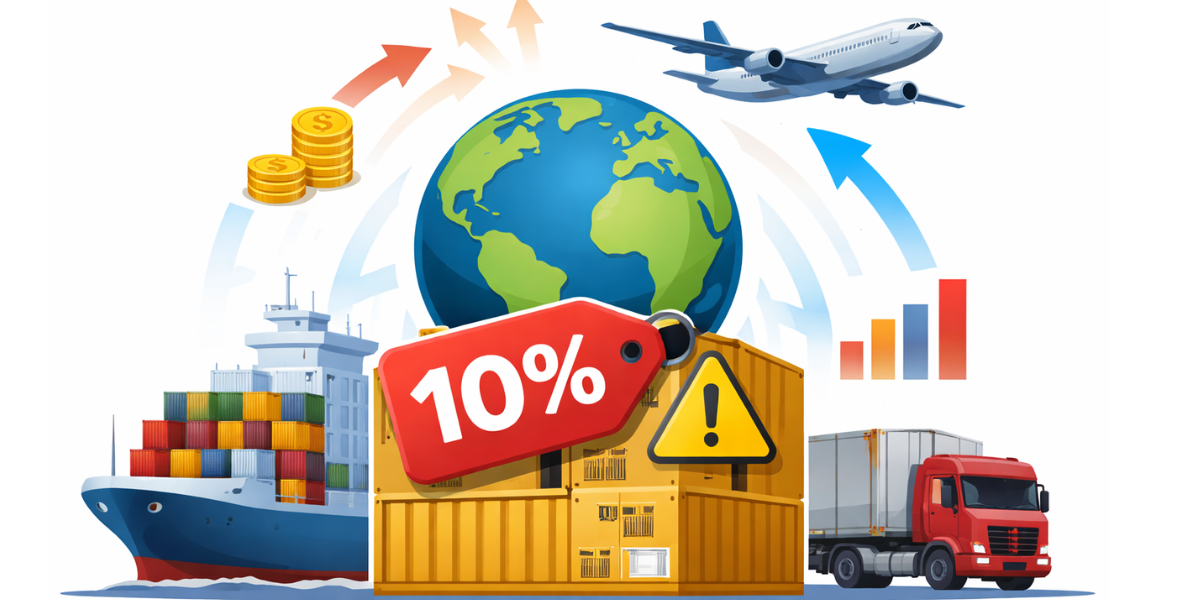
A 10% global tariff may seem moderate on paper, but for modern exporters operating on tight margins, it can significantly disrupt profitability, sourcing strategies, and market competitiveness. In an interconnected trade environment, even a uniform tariff can create ripple effects across procurement, manufacturing, logistics, and pricing models.
For exporters, survival is not just about absorbing costs — it is about redesigning supply chains to remain resilient, flexible, and competitive.
Understanding the Impact of a 10% Global Tariff
A global tariff increases the landed cost of goods, affecting:
- Raw material imports
- Intermediate goods
- Finished product exports
- Cross-border contract manufacturing
For exporters, this means thinner margins unless costs are passed on to customers. However, raising prices can reduce demand in price-sensitive markets. The challenge lies in balancing cost management with market retention.
A 10% tariff can also distort sourcing decisions, forcing businesses to reconsider supplier locations and trade routes.
Lesson 1: Diversify Supply Chains to Reduce Risk
Overdependence on a single country or supplier increases vulnerability during tariff shifts. Modern exporters must adopt a “China+1,” “Europe+1,” or regionally diversified sourcing strategy.
Supply chain diversification helps:
- Spread tariff exposure
- Reduce geopolitical risk
- Improve negotiation leverage
- Maintain continuity during trade disruptions
Strategic regional hubs in Southeast Asia, Eastern Europe, or Latin America can serve as alternative manufacturing bases.
Lesson 2: Reevaluate Cost Structures and Pricing Models
A 10% global tariff requires a detailed cost breakdown analysis. Exporters should assess:
- Component-level costs
- Transportation and freight expenses
- Inventory holding costs
- Currency fluctuations
Instead of directly passing the tariff to customers, companies can explore value-based pricing, subscription models, or bundling strategies to preserve competitiveness.
Cost transparency also strengthens negotiations with distributors and partners.
Lesson 3: Invest in Supply Chain Visibility and Digital Tools
Digital supply chain platforms provide real-time tracking of inventory, supplier performance, and cost variations. With tariff volatility, visibility becomes a strategic advantage.
Technologies such as:
- AI-driven demand forecasting
- Blockchain-based trade documentation
- Automated compliance monitoring
- Cloud-based logistics management
enable exporters to respond quickly to tariff-related disruptions.
Digital transformation is no longer optional — it is central to tariff survival.
Lesson 4: Leverage Trade Agreements and Duty Optimization
Modern exporters must closely monitor trade agreements and regional partnerships. Free trade agreements (FTAs) and preferential trade corridors can offset the impact of a 10% tariff.
Businesses should:
- Review rules of origin compliance
- Optimize product classification codes
- Utilize bonded warehouses
- Explore tariff engineering strategies
Working with trade compliance experts ensures lawful cost optimization while avoiding penalties.
Lesson 5: Strengthen Supplier Relationships
In times of tariff pressure, collaborative partnerships matter. Long-term supplier contracts, shared risk agreements, and co-investment in efficiency improvements can reduce cost burdens.
Strategic exporters engage suppliers in joint planning, forecasting, and innovation to maintain competitiveness despite tariff challenges.
Relationship-driven supply chains outperform transactional models during global trade stress.
Lesson 6: Build Inventory and Production Flexibility
Tariff uncertainty requires agility. Exporters can adopt:
- Nearshoring strategies
- Flexible manufacturing systems
- Multi-location production planning
- Safety stock optimization
Agility allows businesses to shift production quickly when tariff policies change or trade routes become expensive.
Long-Term Strategy: Resilience Over Reaction
Surviving a 10% global tariff is not about short-term reaction. It is about building structural resilience. Modern exporters should integrate scenario planning, stress testing, and geopolitical risk analysis into their strategic roadmap.
Companies that treat tariff shifts as catalysts for innovation often emerge stronger, with leaner supply chains and smarter sourcing strategies.
Conclusion: Turning Tariff Pressure into Competitive Advantage
A 10% global tariff challenges cost structures, supply networks, and pricing models. However, it also presents an opportunity for exporters to modernize operations, diversify sourcing, and invest in digital supply chain tools.
Modern exporters who prioritize flexibility, visibility, and strategic partnerships can not only survive tariff pressure but also strengthen their global competitiveness.
In the evolving landscape of international trade, resilience is the true currency of success.
Also read: The Delhi Declaration and the Future of Ethical AI: What Businesses Need to Know
Add News Pixel as a preferred source on Google – Click Here
Last Updated on: Saturday, February 21, 2026 2:38 pm by News Pixel Team | Published by: News Pixel Team on Saturday, February 21, 2026 2:38 pm | News Categories: News, Latest, Startup
About The Author

Comment here