
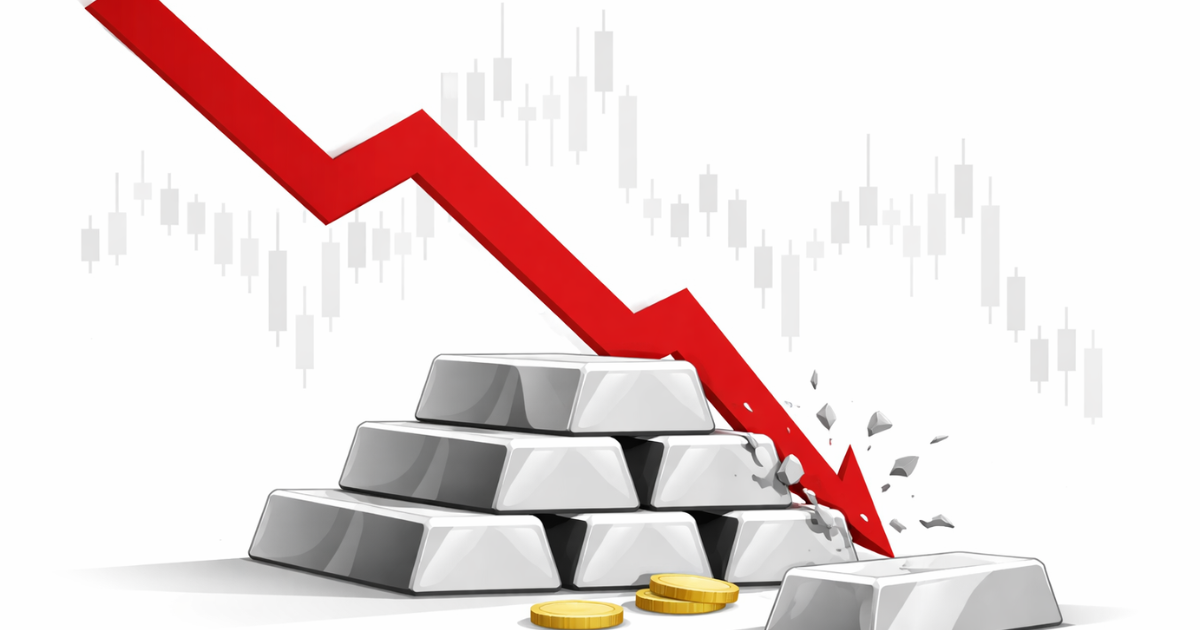
In a dramatic turn of events, silver prices crashed nearly 5% in a single trading session, sending shockwaves across commodity markets. The sudden decline has sparked concerns among investors, traders, and bullion dealers, especially as gold prices are also witnessing heightened volatility.
The sharp correction in silver highlights growing uncertainty in global financial markets, rising bond yields, fluctuating US dollar strength, and shifting investor sentiment toward safe-haven assets.
What Triggered the 5% Crash in Silver Prices?
Several key factors contributed to the steep fall in silver rates:
1. Stronger US Dollar
Silver and gold are dollar-denominated commodities. When the US dollar strengthens, precious metals become more expensive for foreign investors, leading to reduced demand and price corrections.
A recent rally in the dollar index put immediate pressure on silver prices, triggering heavy selling in futures markets.
2. Rising Bond Yields
Higher US Treasury yields make interest-bearing assets more attractive compared to non-yielding assets like gold and silver. As bond yields surged, investors shifted funds away from precious metals, accelerating the sell-off.
3. Profit Booking After Rally
Silver had seen a strong upward rally in recent weeks. The sudden crash may also reflect profit booking by institutional investors and hedge funds locking in gains.
4. Global Economic Uncertainty
While economic uncertainty usually supports gold and silver as safe-haven assets, expectations of tighter monetary policy and delayed interest rate cuts created confusion in the market, increasing volatility.
Why Gold and Silver Markets Are Highly Volatile Right Now
The current volatility in gold and silver markets can be attributed to a mix of macroeconomic and geopolitical factors:
Inflation Concerns
Persistent inflation across major economies continues to influence precious metal prices. Investors use gold and silver as a hedge against inflation, but shifting central bank signals have created mixed expectations.
Federal Reserve Policy Signals
Any indication from the US Federal Reserve regarding interest rate hikes or cuts directly impacts bullion markets. Hawkish statements often pressure prices, while dovish signals push them higher.
Geopolitical Tensions
Global geopolitical tensions — including conflicts, trade disputes, and supply chain disruptions — contribute to price swings in commodities.
Industrial Demand for Silver
Unlike gold, silver has strong industrial applications in:
- Solar panels
- Electronics
- Electric vehicles
- Semiconductor manufacturing
Fluctuations in industrial demand also make silver more volatile compared to gold.
Impact on Indian Investors
India is one of the largest consumers of gold and silver. A 5% crash in silver prices affects:
- Retail investors
- Bullion traders
- Jewellery manufacturers
- Commodity futures traders on MCX
For long-term investors, price corrections often create buying opportunities. However, short-term traders face higher risk due to unpredictable swings.
Is This a Temporary Correction or Start of a Bigger Trend?
Market analysts suggest that the silver crash could be:
- A short-term correction driven by technical selling, or
- A signal of broader commodity market weakness if global monetary tightening continues.
Much will depend on:
- Upcoming US inflation data
- Federal Reserve commentary
- Dollar index movement
- Global economic indicators
If economic uncertainty persists, safe-haven demand may return, supporting both gold and silver prices.
Investment Strategy During Precious Metals Volatility
If you are investing in gold and silver during volatile times, consider:
Diversification
Avoid overexposure to a single asset class. Balance precious metals with equities, bonds, and other commodities.
Long-Term Perspective
Precious metals historically perform well over longer cycles, even after sharp corrections.
Systematic Buying
Instead of lump-sum investments, consider staggered buying during dips to average out volatility.
Monitor Global Indicators
Keep an eye on US interest rates, inflation trends, and geopolitical developments.
Conclusion
The 5% crash in silver prices reflects growing uncertainty in global financial markets. With gold and silver markets experiencing massive volatility, investors must remain cautious yet strategic.
While short-term fluctuations can be unsettling, precious metals continue to play a crucial role as inflation hedges and safe-haven assets. Whether this crash marks a deeper correction or a temporary dip will depend on upcoming economic signals and central bank policies.
For now, one thing is clear — volatility in the bullion market is far from over.
Also read: Assam Gets India’s First North-East Emergency Landing Facility: A Strategic Shield Near the LAC
Add News Pixel as preferred source on Google- Click here
Last Updated on: Saturday, February 14, 2026 3:24 pm by News Pixel Team | Published by: News Pixel Team on Saturday, February 14, 2026 3:24 pm | News Categories: Finance, India
About The Author

Comment here