
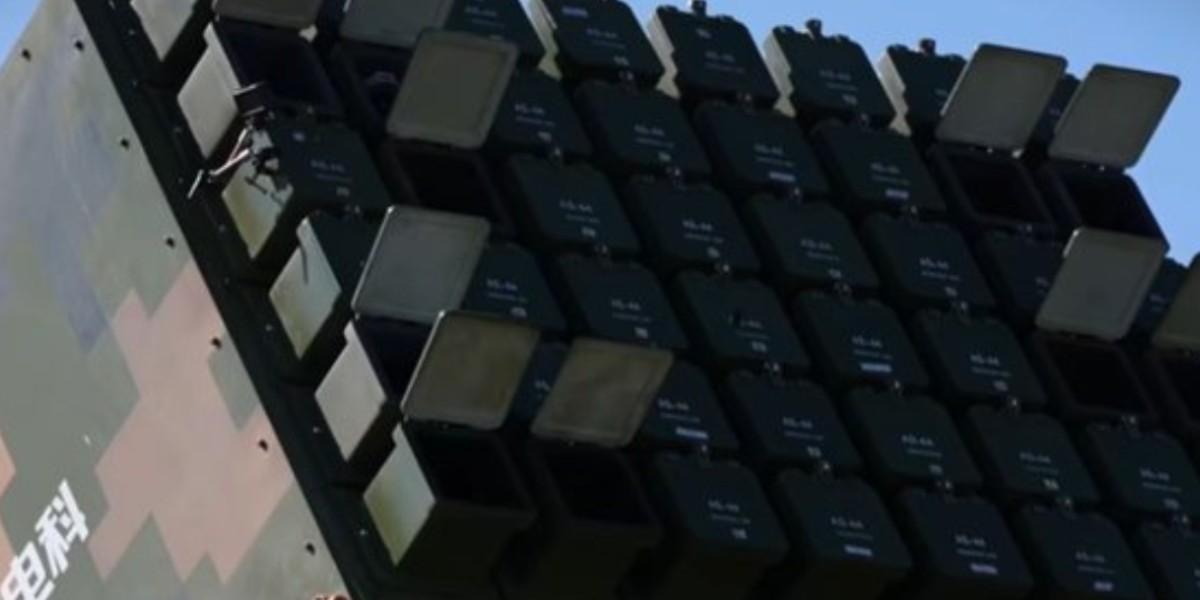
China has conducted tests of a new drone swarm system, designed to deploy large numbers of unmanned aerial vehicles (UAVs) in coordinated operations. The development is being viewed as a significant step in modern warfare technology, particularly in its potential to challenge traditional air defence mechanisms.
The system is reportedly capable of launching dozens of drones simultaneously, controlled through a centralised artificial intelligence (AI) command.
Key Highlights
- China tests a new drone swarm system with AI coordination
- Capable of deploying up to 96 drones in a single operation
- Designed for deep-strike and coordinated attack missions
- Raises concerns over effectiveness of existing air defence systems
What is the Drone Swarm System?
The newly tested drone swarm system refers to a coordinated network of UAVs that operate together using AI-based control. Instead of functioning individually, the drones communicate and adapt in real time to achieve mission objectives.
Such systems are designed to overwhelm enemy defences by attacking from multiple directions simultaneously, making interception more difficult.
How Does AI Integration Work?
At the core of this technology is a central AI command unit that manages drone behaviour during operations. The AI can analyse battlefield data, assign targets, and adjust flight paths dynamically.
This reduces reliance on human operators and enables faster decision-making in complex scenarios.
The use of AI also allows drones to continue functioning even if communication links are partially disrupted.
Official Perspective
While official details remain limited, defence analysts suggest that the test reflects China’s focus on integrating AI with military hardware.
Experts note that such systems are part of a broader global trend where countries are investing in autonomous and semi-autonomous defence technologies.
Context / Background
Drone warfare has evolved rapidly over the past decade, with UAVs being used for surveillance, reconnaissance, and targeted strikes.
The concept of swarm drones—where multiple units operate in coordination—has gained attention due to its ability to saturate and potentially bypass conventional air defence systems.
Several countries, including the United States and Russia, are also exploring similar technologies, indicating a growing emphasis on next-generation warfare tools.
Public Impact
While the development is primarily military, it has broader implications for global security and defence strategies. The advancement of drone swarm systems could lead to changes in how nations design and deploy air defence infrastructure.
For civilians, such technological shifts may influence geopolitical stability and defence spending priorities.
Conclusion
China’s reported test of an AI-enabled drone swarm system marks a notable development in modern military capabilities. As countries continue to invest in advanced technologies, the balance between offensive systems and defensive measures is likely to evolve further.
The development underscores the increasing role of artificial intelligence in shaping the future of warfare.
Also read: Christoph Schnellmann: The Man Leading Jewar Airport Project Set to Transform Delhi-NCR Aviation
Add News Pixel as a preferred source on Google – Click Here
Last Updated on: Friday, March 27, 2026 4:04 pm by E. Lakshmi Tejasri | Published by: E. Lakshmi Tejasri on Friday, March 27, 2026 4:04 pm | News Categories: News, Technology
About The Author

Comment here