
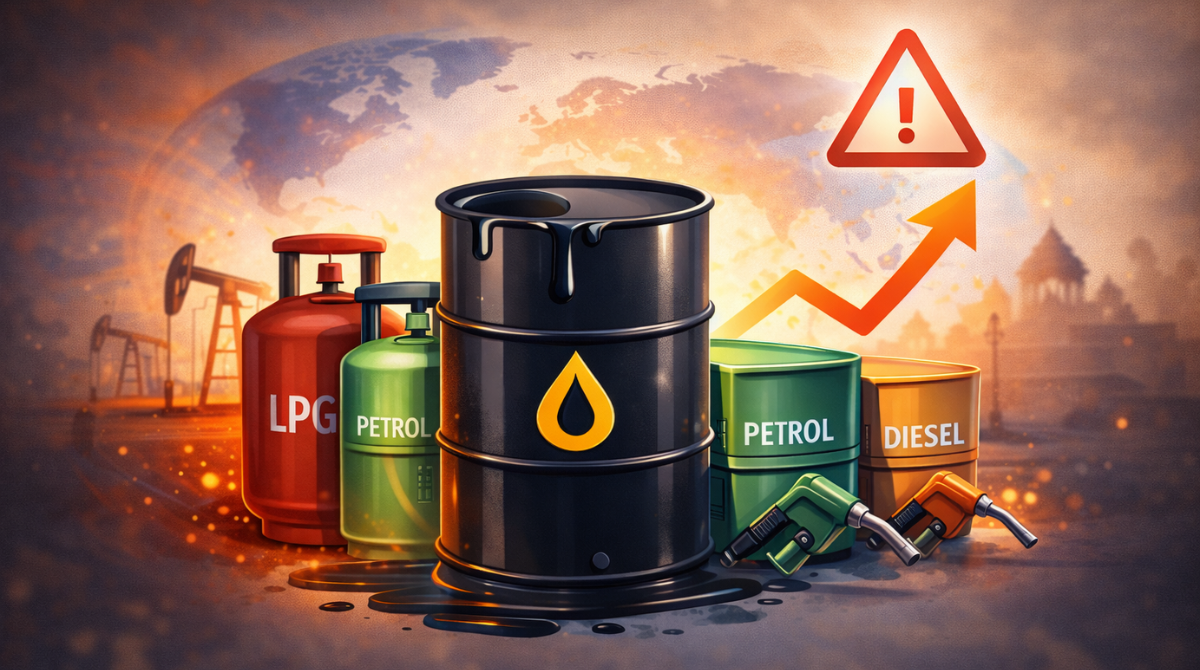
The recent surge in crude oil prices in global markets has sparked concerns about possible increases in fuel costs across India. With international crude prices reportedly crossing the $115 per barrel mark, questions are being raised about whether petrol, diesel, and liquefied petroleum gas (LPG) cylinder prices will soon rise for Indian consumers.
Fuel prices in India are closely linked to global energy markets. When crude oil prices increase significantly, it often leads to higher costs for refined petroleum products. As a result, policymakers, oil marketing companies, and consumers are closely monitoring the current trend in the global oil market.
Why Crude Oil Prices Are Rising
The sharp increase in crude oil prices is being driven by a combination of global factors, including supply concerns, geopolitical tensions, and rising demand from major economies.
Energy markets tend to react quickly to disruptions in oil-producing regions. When supply uncertainty emerges, traders anticipate tighter availability, which pushes crude oil prices higher. At the same time, global demand for energy has remained strong, especially as economies continue to grow and industrial activity expands.
These combined factors have created upward pressure on crude oil prices, raising concerns about potential impacts on fuel costs in countries that rely heavily on imported oil.
India’s Dependence on Crude Oil Imports
India is one of the world’s largest importers of crude oil, with a significant portion of its energy needs met through imports. Because of this dependence, fluctuations in crude oil prices can have a direct impact on the country’s fuel economy.
When crude oil prices rise sharply in international markets, the cost of importing oil increases. This can eventually influence domestic fuel prices, particularly petrol and diesel, which are widely used for transportation, logistics, and industrial operations.
As global crude oil prices move higher, oil marketing companies in India must evaluate how these changes affect refining costs and retail pricing.
Possible Impact on Petrol and Diesel Prices
Petrol and diesel prices in India are influenced by several factors, including international crude oil prices, refining costs, transportation expenses, and government taxes.
If crude oil prices continue to remain above $115 per barrel for a sustained period, it may create pressure on fuel retailers to adjust retail prices. Higher input costs could eventually translate into increased petrol and diesel prices for consumers.
However, the final decision on fuel price adjustments often depends on multiple considerations, including government policies, tax structures, and market conditions. Authorities sometimes intervene to prevent sudden spikes in fuel costs that could affect inflation and economic stability.
LPG Cylinder Price Concerns
Along with petrol and diesel, rising crude oil prices can also influence the cost of LPG cylinders used by millions of households in India. LPG is widely used for cooking and is an essential commodity for many families.
When crude oil prices increase, the cost of producing and distributing LPG may also rise. This could lead to potential adjustments in cylinder prices if global energy costs remain elevated.
The government sometimes provides subsidies or pricing adjustments to protect consumers from sudden increases in LPG costs. However, prolonged increases in crude oil prices can make it challenging to maintain stable pricing without financial support.
Broader Economic Impact
Higher crude oil prices can affect the broader economy in multiple ways. Fuel costs influence transportation expenses, which in turn impact the prices of goods and services across various sectors.
For example, rising crude oil prices may lead to higher logistics costs for businesses that rely on fuel for transportation. This can contribute to inflation, as companies may pass on the increased costs to consumers.
Industries such as aviation, shipping, manufacturing, and agriculture are particularly sensitive to changes in crude oil prices. Sustained increases can therefore have a ripple effect throughout the economy.
Government and Market Response
When crude oil prices rise sharply, governments and energy regulators often monitor the situation closely to manage potential economic impacts. Policy measures such as tax adjustments, subsidy programs, or strategic reserves may sometimes be used to stabilize fuel markets.
Oil marketing companies also review pricing strategies and operational costs to ensure that fuel supply remains stable despite fluctuations in crude oil prices.
In some cases, governments may delay price increases or absorb part of the cost through fiscal measures to protect consumers and maintain economic stability.
Outlook for Fuel Prices in India
While the recent surge in crude oil prices has raised concerns about possible fuel price increases, the final outcome will depend on how global markets evolve in the coming weeks.
If crude oil prices remain elevated or continue to climb, pressure on domestic fuel pricing may increase. However, if global supply conditions improve or geopolitical tensions ease, oil prices could stabilize.
For now, policymakers, industry experts, and consumers are closely watching global energy markets to assess whether the recent rise in crude oil prices will lead to adjustments in petrol, diesel, and LPG cylinder prices in India.
Also read: Moneyboxx Finance Reports Strong Collection Performance with 99.2% Efficiency in February 2026
Add News Pixel as a preferred source on Google – Click Here
Author- E. Lakshmi Tejasri
Last Updated on: Monday, March 9, 2026 11:54 am by E. Lakshmi Tejasri | Published by: E. Lakshmi Tejasri on Monday, March 9, 2026 11:54 am | News Categories: News

Leave a Reply