
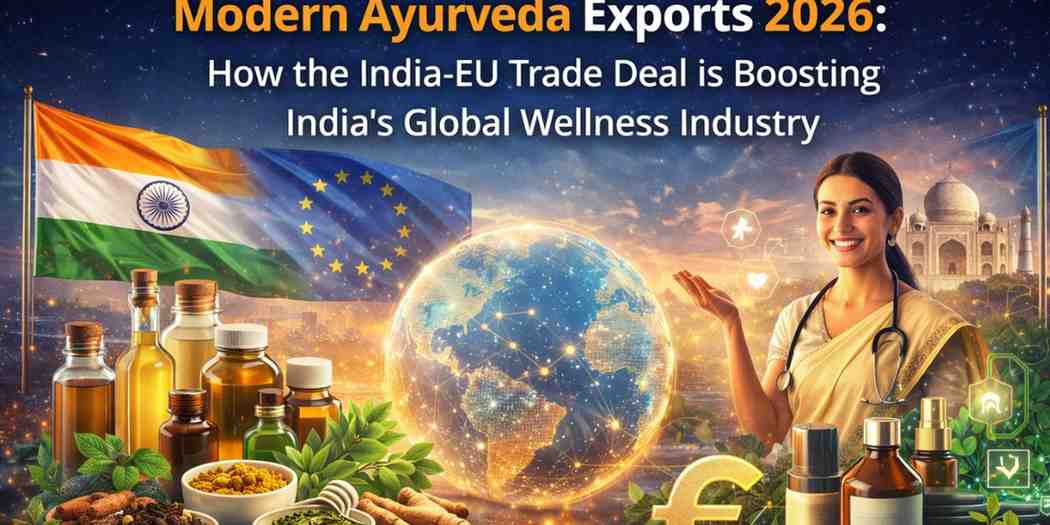
The India-EU Trade Deal 2026 is transforming the future of Modern Ayurveda exports from India, opening new growth opportunities in the global wellness market. With reduced tariffs, improved regulatory access, and rising European demand for natural healthcare, Indian Ayurvedic products are gaining strong momentum in the European Union.
From Ayurvedic medicines and herbal supplements to organic skincare and wellness tourism, India’s traditional healing system is becoming a major contributor to the global herbal products market.
What is Modern Ayurveda? The Rise of Science-Backed Indian Wellness
Modern Ayurveda combines traditional Ayurvedic knowledge with:
- Scientific research and clinical trials
- EU-compliant manufacturing standards
- Organic certification and sustainable sourcing
- Standardized herbal formulations
- Digital Ayurveda consultations and telemedicine
This modernization helps Ayurveda products meet EU health regulations, increasing global trust and export potential.
How the India-EU Trade Deal Boosts Ayurvedic Product Exports
The India-EU Free Trade Agreement (FTA) 2026 is expected to significantly increase Ayurveda export growth due to:
1. Reduced Tariffs on Ayurvedic Medicines and Herbal Products
Lower import duties on herbal supplements, nutraceuticals, essential oils, Ayurvedic cosmetics, and organic wellness products make Indian exports more competitive in Europe.
2. Easier Market Access for Indian Herbal Brands
Streamlined certification processes and mutual regulatory recognition allow Indian companies to enter the European natural healthcare market faster.
3. Rising Demand for Natural and Organic Wellness in Europe
European consumers increasingly prefer:
- Plant-based healthcare solutions
- Chemical-free beauty products
- Natural immunity boosters
- Sustainable wellness brands
Ayurvedic ingredients like Ashwagandha, Turmeric (Curcumin), Neem, Triphala, Brahmi, and Moringa are seeing high global demand.
Global Ayurveda Market Growth in 2026
The global Ayurveda market size is expanding rapidly due to:
- Growth in the herbal supplements industry
- Increasing demand for Ayurvedic skincare and beauty products
- Rise of holistic healthcare solutions
- Expansion of cross-border e-commerce
- Increased awareness of preventive healthcare
Experts predict strong double-digit growth in the Indian wellness exports sector over the next five years.
Europe’s Growing Interest in Indian Herbal and Natural Products
The European wellness industry is shifting toward natural medicine and alternative therapies. Key drivers include:
- Post-pandemic focus on immunity
- Stress-related lifestyle disorders
- Demand for sustainable and eco-friendly brands
- Growth in vegan and plant-based markets
This aligns perfectly with India’s Ayurvedic healthcare and organic product exports.
Opportunities for Indian Ayurveda Companies and Startups
The India-EU trade deal creates new opportunities for:
- Ayurvedic pharmaceutical manufacturers
- Herbal extract exporters
- Organic farming cooperatives
- Nutraceutical startups
- Ayurvedic skincare and cosmetic brands
- Wellness tourism operators
Indian startups that focus on EU-certified Ayurvedic products, clinical validation, and sustainable packaging are likely to gain competitive advantage.
Regulatory Compliance: Key to Success in the EU Market
To expand successfully in Europe, Indian exporters must comply with:
- EU Good Manufacturing Practices (GMP)
- Organic certification standards
- Product labeling and safety norms
- Clinical documentation requirements
- Sustainable sourcing guidelines
Strengthening quality control enhances the global reputation of Indian Ayurveda exports.
Ayurveda Wellness Tourism: A Growing Export Opportunity
The India-EU trade partnership also strengthens Ayurveda medical tourism in India. European visitors are increasingly choosing India for:
- Panchakarma detox programs
- Ayurvedic rejuvenation therapies
- Yoga and meditation retreats
- Holistic healing centers
This contributes to the growth of India’s wellness tourism industry and service exports.
Challenges Facing Ayurveda Global Expansion
Despite strong growth, challenges remain:
- Strict EU regulatory standards
- Need for more scientific research and global clinical trials
- Intellectual property protection for traditional knowledge
- Competition from Chinese herbal medicine and Western supplements
Addressing these challenges will determine the long-term success of Ayurveda exports in Europe.
The Future of Indian Wellness Exports After the EU Trade Deal
With strong government support, improved trade access, and global demand for natural health solutions, India is well-positioned to become a leader in the global herbal medicine and wellness market.
Modern Ayurveda represents a powerful combination of:
- Ancient Indian healthcare wisdom
- Modern scientific validation
- Sustainable global trade
- Growing consumer awareness
Conclusion: Modern Ayurveda Becomes a Global Wellness Powerhouse
The India-EU Trade Deal 2026 marks a turning point for Indian Ayurveda exports and the global wellness industry. As Europe embraces natural healthcare, India’s herbal and Ayurvedic sector is set for unprecedented growth.
Modern Ayurveda is no longer limited to tradition — it is now a global, science-backed, export-driven wellness industry shaping the future of natural healthcare worldwide.
Also read : The EV Shift 2.0: Navigating India’s New Charging Infrastructure in 2026
Add News Pixel as preferred source on Google- Click here
Last Updated on: Thursday, February 12, 2026 4:17 pm by News Pixel Team | Published by: News Pixel Team on Thursday, February 12, 2026 4:17 pm | News Categories: India

Leave a Reply